




The Barbie Movie comes out this weekend. As the Barbie trailer says, “If you love Barbie, this movie is for you. If you hate Barbie, this movie is for you.”
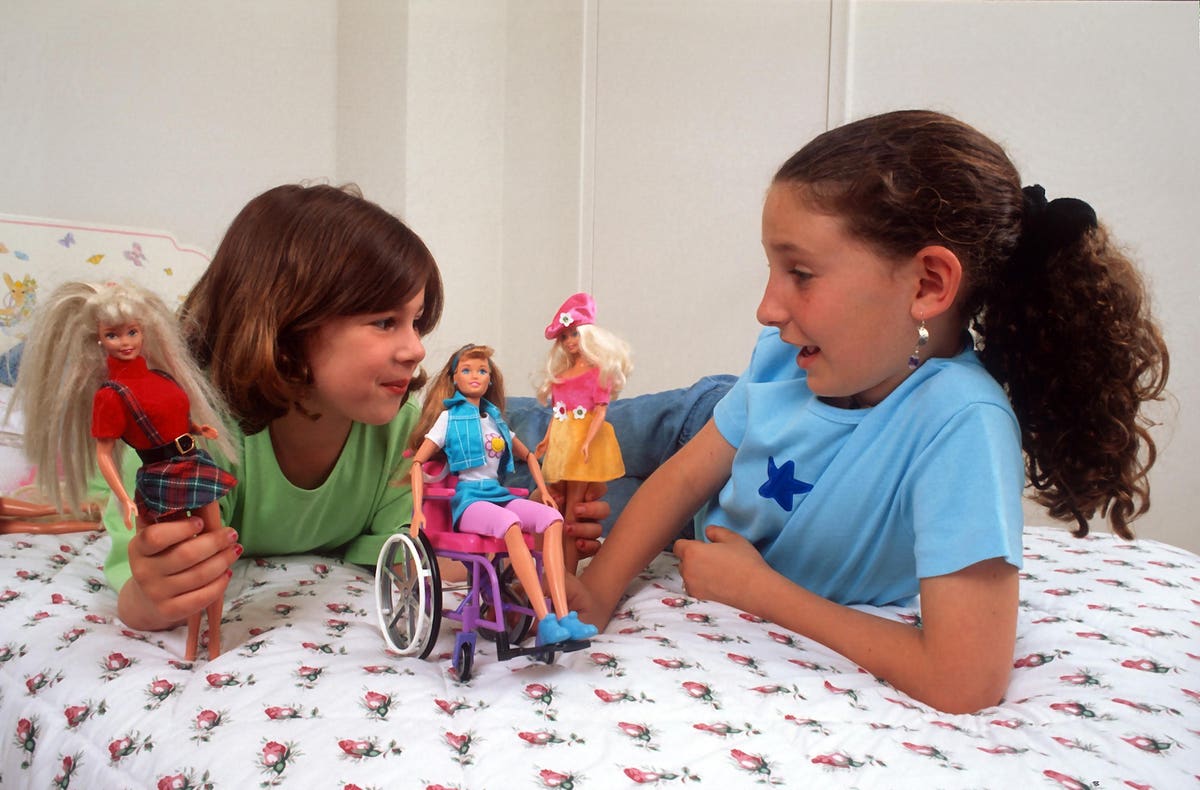
Barbies are not just plastic children’s toys. Barbies are fraught historical objects, derided by second wave feminists as problematic manifestations of the male gaze. Barbies are also a child’s first agent of consumption and capitalism – and highly gendered ones as such. Barbies dress up from an ever-expanding wardrobe, attend destination teddy bear weddings, and collect cars and houses the way adult women do. Hot pink training wheels for the siren calls of consumption.
But beyond even their cultural significance, Barbies are imagination. For billions (yes, billions) of children and pre-teens over the last 64 years, Barbie has come to mean whatever girls hope and dream life to be like. Dolls that are the blank canvas to project adventures and stories onto, where life in plastic is a fantastic plot line filled with pink limousines, dream houses, and fashion. The doll was originally invented for this purpose: to let girls explore being grown women.
The Mattel and the Warner Brothers teams have collapsed this fiction into reality through the incredible marketing extensions of the film. Fans can book a night at the real-life Malibu Barbie Dream House on AirBnB. Anyone can don the movie’s iconic rollerblades by purchasing a pair from Impala. Fans can even bring #Barbiecore into the kitchen by trying the viral Barbie pasta recipes online (which you can cook with Barbie pasta from Whole Foods). This year’s pantone isn’t far off, either.
The near omni-present movie marketing feels smart, albeit reaching. Just like the wry and aware writing of Greta Gerwig, the marketing messages and imagery (complete with a TIME magazine cover lined with diverse Barbie representations) herald the idea that we live in a world where equal rights and feminism are important – and that we have transcended the origins of the doll rooted in gendered house play.
Do not get it twisted: this is the rightful and twenty first century approach to storytelling for Barbie. We do live in a diverse and progressive world, and a female production company should be the arbiters of a complex reflection on who Barbie is and what she can become. But for as sharp as the writing and marketing appears, one cannot shake the feeling that its popularity, and the half million articles written on Barbie this year alone, lies deeply in the collective nostalgia for a less complicated existence associated with Barbieland– a nostalgia for the ease of following society’s prescribed gender norms, even? Life imitates art, could one say?
Why have pink and puffy dress designers like Selkie and Lirika Matoshi become so popular these last couple years? Why are Girl Dinners having a moment on TikTok? Just as we loathe the gender norms we were brought up to conform to, we also have some positive personal associations with them. There is a sentimental longing for an aesthetic that heralds a kind of simplicity that women simply do not have in our lives today, balancing career, the power dynamics of modern relationships, delayed or foregone motherhood, ageism, and the physical demands of thinness (as the movie points to) shrouded in the pursuit of a healthy lifestyle. Barbie, rather, represents a time in many lives when the illusion of having it all – whatever that meant at the time – was achievable and embodied by a tiny pink blonde in heels.
There is something powerful about what the movie attempts to do: reclaim gender, to celebrate the pink, the smol, the girly in all its flaws and complications. Celebrating it while simultaneously subverting it, which feels familiar, and is exactly the brand of millennial postmodernism the movie comprehends as wider zeitgeist.
Importantly, the power of appealing to a millennial woman, who commands the most spending power of any demographic, will be felt this weekend. Projections are that the movie could make $100M in the US and $500M worldwide, and analysts project a Mattel (MAT) 10-percent profit lift this year as a result. By catering to this consumer’s complicated feelings, and providing Margot Robbie and Greta Gerwig a wide license to examine Barbie IP, Mattel has ushered in a new era of capitalizing on female-focused, nostalgia-driven IP. Move over, Marvel – here come Sailor Moon, Bratz, and Cabbage Patch Dolls. Here for it.
Read the full article here