




In the last two decades, Cuba has made important achievements in building a more sustainable society, in part because, and in spite of, the many hurdles it faces. Such feats have been the result of efforts, innovation and entrepreneurship from all levels of Cuban society; from state-led campaigns to cooperatives, businesses, organised communities and individuals.
Cuba’s form of government is not the subject of this article, while it may be for many others who wish to discuss it. Instead, the point is to foster debate on the attainments, regarding sustainable development, in a poor country which has also been under heavy sanctions for more than 60 years.
Being forced to live with scarce quantities of fossil fuels, it has pioneered different forms of energy saving and alternative energy production. If it were not for the blockade, Cuba could easily be importing oil from the US or Mexico, two geographically close producers. However, general shipping is restricted: tankers and cargo vessels cannot access US ports six months from docking in Cuba.
Between the fall of the Soviet Union and the appearance of an ally in Venezuela, Cuba was forced to do without oil. It cannot import from North American producers, while vessels that dock in Cuba cannot enter US ports for six months. Even with a friend in the region, it hasn’t been able to import enough to satisfy its needs. This has been especially the case since a full-blown economic crisis and US sanctions have hit Venezuela. It is currently importing fuel from Russia and Mexico, paying a premium for being under the US embargo.
The Caribbean nation is also one of many Small Island Developing States (SIDS) that are hardest hit by climate change. Some scientists argue tropical storms are increasing in intensity, while many areas are vulnerable to rising sea levels. The IMF published a report arguing that “the Caribbean region is most vulnerable to natural disasters and has the highest energy prices”. For different reasons, for years now sustainability has made it to the top of the agenda in Havana.
Projects from the University of Leeds, the World Wildlife Fund, the Global Footprint Network, and the Sustainable Development Index show that Cuba is among the leaders in closing the gap between human development and sustainability. It is a very poor country on Western standards, and there is a wide range of political and economic problems that ordinary Cubans face day in and day out. The island is also currently undergoing a particularly hard period. However, in some key aspects it is better off than many other developing nations. GDP per capita is slightly higher than in the comparable Dominican Republic, or that of most other nations in the Latin America & Caribbean region. In terms of health and education, Cubans are similar to inhabitants of developed countries.
In 2006, moved by desperation, Cuba made a national effort to spend less energy. Beyond simply asking people to consume less, it launched campaigns for greater energy efficiency. On a nation-wide level, Cubans replaced electrical appliances, such as light bulbs and refrigerators, with more energy-efficient ones.
Let’s imagine if we did that everywhere else. For example, the London School of Economics highlighted that “in the UK households reportedly used around 30% less energy in 2017 than in 1970, largely due to energy efficiency policies”. The report also pointed out criticism of measures having been taken half-heartedly. What if we seriously committed to this idea?
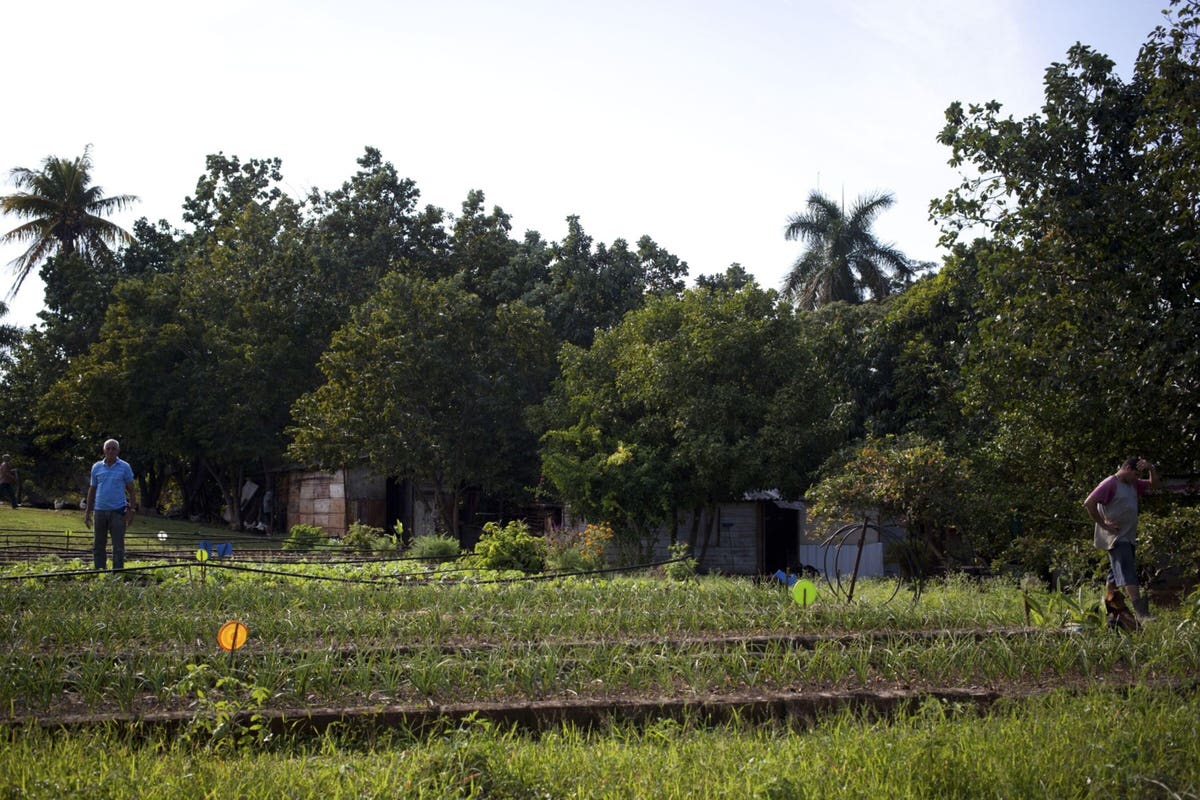
Cuba has also promoted growing food domestically, including in urban areas. This has involved private farmers, cooperatives, and state actors. This had led to a rise in organic agriculture and brought production and consumption close together. Small-scale farmers from across the developing world have been learning from methods developed in this Caribbean island. This may seem of little importance in the US or Europe, but their work is crucial in feeding and employing hundreds of millions less developed countries.
It is also noteworthy that the island was a plantation colony, where cash crops dominated right into independence and communist rule. In the last 25 years, however, Cubans have committed to reforestation. In 2015, a report pointed out that then 30.6% of the country was covered in forests, up from an estimated 14% around the time of the revolution in 1959. Before Spanish colonisation, forest coverage is estimated to have been 90%.
Due to the blockade, Cubans have also been forced to innovate reusing, repairing, and recycling whatever they cannot source from imports. Note that production is also affected by sanctions, so it is equally difficult for Cubans to create a strong manufacturing sector. Though this proves there is an important potential, conditions are often not ideal. Surely Cubans are fed up with old cars, and could gladly do with newer, more energy-efficient models. In the same line, much innovation takes place in an environment full of hardship and desperation.
Now let us turn all this on its head. What if, instead of being pushed into being more sustainable, we incentivise innovation around the world? Can we take the same ideas into a different context? Surely there are many ways to harness energy. In Cuba they prefer solar given their climate, from panels to water heaters. Elsewhere geothermal, hydroelectric, nuclear, hydrogen or others will be the cleaner, most cost-effective way. Likewise, there are methods for energy conservation such as using building methods to cool down, whereas in other places architects should pursue insulation. Can we imagine the potential of the same effort, but in a developed economy? We cannot just brush aside all ideas and lessons because of Cuba’s form of government. Can we act with the same innovativeness and commitment as ordinary Cubans are doing, out of necessity, before it is too late?
Read the full article here