





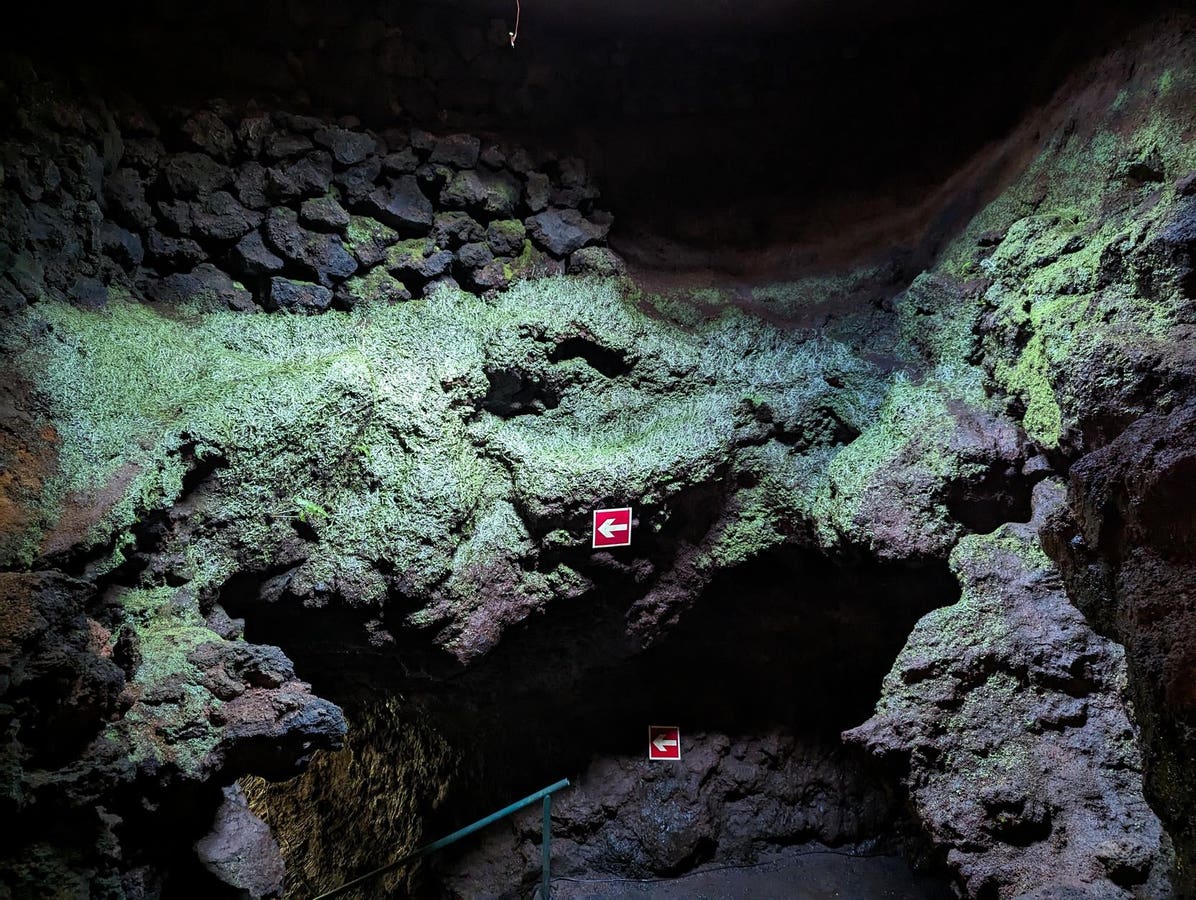
Somewhat akin to astronomical dark matter (the unseen stuff thought to make up some 80 percent of all matter in the cosmos), so-called microbiological ‘dark matter’ here on Earth poses almost as much of a conundrum as its cosmic namesake.
Biological dark matter represents newly-discovered microorganisms that have never before been seen, much less scientifically classified in any way, shape or form. Most of this Earth-based microbial dark matter is usually only found in volcanic lava caves or underground caverns.
We’ve discovered that things that look completely nonbiological in caves have a great deal of microbial diversity, including a huge amount of what we call dark matter, Diana Northup, a geomicrobiologist and professor emerita at the University of New Mexico in Albuquerque, told me at a recent conference on sub surface life. They are microorganisms that we can’t classify until they are studied, she says.
Such biological dark matter is revealing a whole new realm of sub surface life.
To that end, at last month’s European Astrobiology Institute conference entitled Life in the Sub-Surface, an international group of researchers gathered on the island of Terceira in the Azores archipelago to grapple with some of the most fundamental questions confronting microbiologists. That is, just how did life begin on Earth? And what do we really know about Earth’s own microbiological biosphere? The reality is not much.
The Azores lie at the convergence of three tectonic plates in the mid-Atlantic thought to be the source of much of the volcanism that created the islands. And the island of Terceira is a locus of a lot of this subterranean biological research.
When I first started studying microbiology, there were 11 phyla of bacteria, now there’s well over 100 phyla of bacteria, Northup says. (In biology, an individual phylum is a major taxonomic classification that ranks just below a kingdom.)
To make her point, Northup says that when she takes people into caves, they often don’t even realize they’re looking at a wall of microbes. To see some of these microorganisms, she and colleagues use portable scanning electron microscopes that work at magnifications of as much as 3000. Such magnifications are needed to view microbes no larger than a tiny fraction of the width of a human hair.
The lesson is that in Earth caves, at least, bare rock is often not biologically bare, as Northup noted in her conference presentation.
Azores Caves Harbor A Treasure Trove Of Such Subterranean Life
Astrobiologists are fascinated by the Azores network of volcanoes and their subterranean habitats because they offer clues to how future missions to the Moon and Mars will hunt for microfossils below the surface.
Caves on Mars are likely to persist over longer timescales than on Earth.
Caves on Mars exist in a far quieter geological and hydrological environment than those on earth and consequently are of much greater antiquity, Penelope Boston, a geomicrobiologist and astrobiologist at NASA Ames Research Center, told me via email. On Earth, with our dynamic erosion and subduction processes, few geological features can persist long enough to be a match for those on Mars, she says.
Besides the lava tubes and pits that we see exposed on Mars, there are undoubtedly cavities that have no current openings but may contain and protect ancient biosignatures and also important climate history data, says Boston.
If we can find a cave that’s old enough on Mars, is it possible that we might find microfossils?
If we eventually find such traces in a sub surface environment on Mars, they will require a great deal of analysis to be able to say whether they were once living, says Boston. But she says that is true for very ancient potential traces of life here on Earth, you can’t just look at them and say “Eureka!”
When will NASA start exploring caves on Mars?
Work is ongoing in different research groups inside and outside of NASA to develop robotic approaches to difficult terrain including caves, says Boston. If all goes according to NASA’s current lunar plans, I can imagine that our Artemis program’s will provide us with an engineering test bed for developing advanced robotic cave access within the next twenty years, she says.
Finding Life On Mars Won’t Be Obvious
Initially, we did a lot of our cave research on things that just jumped out at you, says Northup. We need to be looking at things that aren’t so obvious, because if we find life on Mars, it is probably not going to be something as obvious as a microbial mat, she says.
Read the full article here