



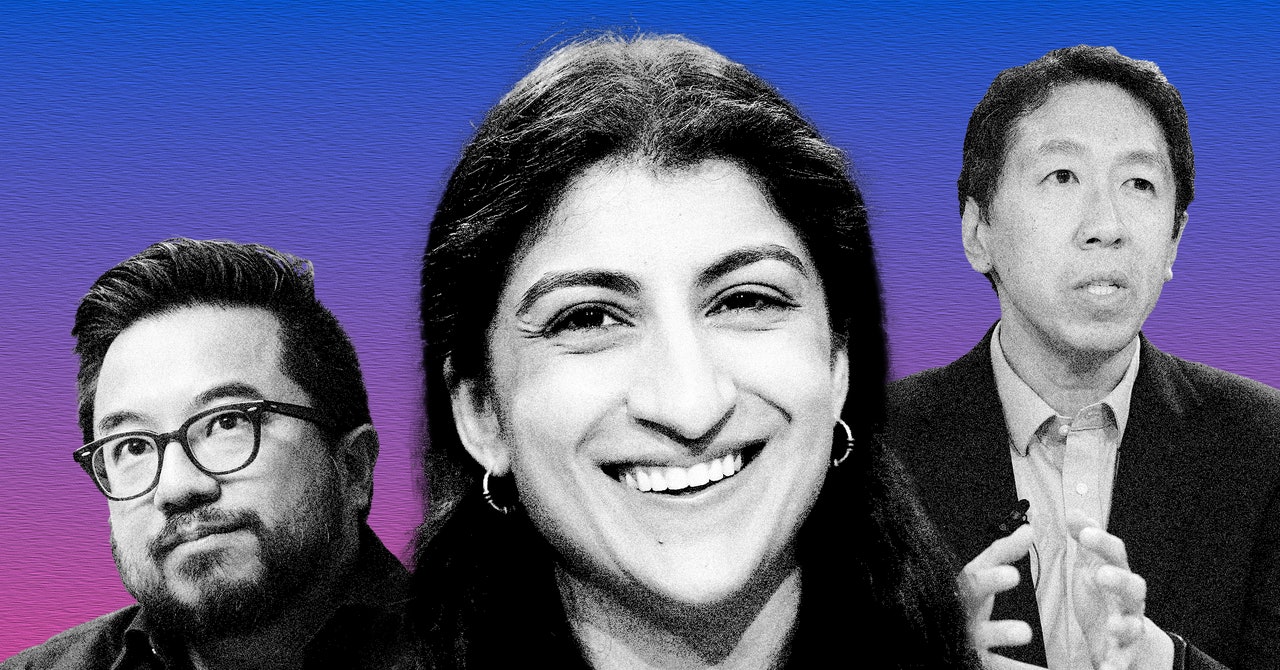
Many of yesterday’s talks were littered with the acronyms you’d expect from this assemblage of high-minded panelists: YC, FTC, AI, LLMs. But threaded throughout the conversations—foundational to them, you might say—was boosterism for open source AI.
It was a stark left turn (or return, if you’re a Linux head) from the app-obsessed 2010s, when developers seemed happy to containerize their technologies and hand them over to bigger platforms for distribution.
The event also happened just two days after Meta CEO Mark Zuckerberg declared that “open source AI is the path forward” and released Llama 3.1, the latest version of Meta’s own open source AI algorithm. As Zuckerberg put it in his announcement, some technologists no longer want to be “constrained by what Apple will let us build,” or encounter arbitrary rules and app fees.
Open source AI also just happens to be the approach OpenAI is not using for its biggest GPTs, despite what the multibillion-dollar startup’s name might suggest. This means that at least part of the code is kept private, and OpenAI doesn’t share the “weights,” or parameters, of its most powerful AI systems. It also charges for enterprise-level access to its technology.
“With the rise of compound AI systems and agent architectures, using small but fine-tuned open source models gives significantly better results than an [OpenAI] GPT4, or [Google] Gemini. This is especially true for enterprise tasks,” says Ali Golshan, cofounder and chief executive of Gretel.ai, a synthetic data company. (Golshan was not at the YC event).
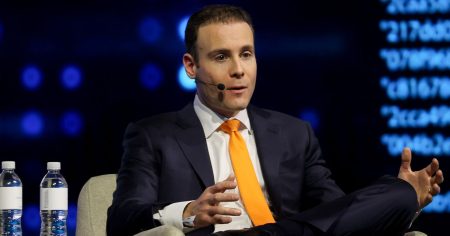
“I don’t think it’s OpenAI versus the world or anything like that,” says Dave Yen, who runs a fund called Orange Collective for successful YC alumni to back up-and-coming YC founders. “I think it’s about creating fair competition and an environment where startups don’t risk just dying the next day if OpenAI changes their pricing models or their policies.”
“That’s not to say we shouldn’t have safeguards,” Yen added, “but we don’t want to unnecessarily rate-limit, either.”
Open source AI models have some inherent risks that more cautious technologists have warned about—the most obvious being that the technology is open and free. People with malicious intent are more likely to use these tools for harm then they would a costly private AI model. Researchers have pointed out that it’s cheap and easy for bad actors to train away any safety parameters present in these AI models.
“Open source” is also a myth in some AI models, as WIRED’s Will Knight has reported. The data used to train them may still be kept secret, their licenses might restrict developers from building certain things, and ultimately, they may still benefit the original model-maker more than anyone else.
And some politicians have pushed back against the unfettered development of large-scale AI systems, including California state senator Scott Wiener. Wiener’s AI Safety and Innovation Bill, SB 1047, has been controversial in technology circles. It aims to establish standards for developers of AI models that cost over $100 million to train, requires certain levels of pre-deployment safety testing and red-teaming, protects whistleblowers working in AI labs, and grants the state’s attorney general legal recourse if an AI model causes extreme harm.
Wiener himself spoke at the YC event on Thursday, in a conversation moderated by Bloomberg reporter Shirin Ghaffary. He said he was “deeply grateful” to people in the open source community who have spoken out against the bill, and that the state has “made a series of amendments in direct response to some of that critical feedback.” One change that’s been made, Wiener said, is that the bill now more clearly defines a reasonable path to shutting down an open source AI model that’s gone off the rails.
The celebrity speaker of Thursday’s event, a last-minute addition to the program, was Andrew Ng, the cofounder of Coursera, founder of Google Brain, and former chief scientist at Baidu. Ng, like many others in attendance, spoke in defense of open source models.
“This is one of those moments where [it’s determined] if entrepreneurs are allowed to keep on innovating,” Ng said, “or if we should be spending the money that would go towards building software on hiring lawyers.”
Read the full article here