




Mistral AI has quantified the environmental price of artificial intelligence with unprecedented transparency, releasing what appears to be the first comprehensive lifecycle assessment of a large language model. The French AI startup’s detailed analysis of its Mistral Large 2 model reveals that training alone generated 20,400 metric tons of carbon dioxide equivalent and consumed 281,000 cubic meters of water over 18 months.
This disclosure comes as enterprises face dual pressures – implementing AI to stay competitive while fulfilling sustainability commitments. The audit provides decision-makers with concrete data points that were previously hidden behind industry opacity, enabling more informed technology adoption strategies.
The numbers from Mistral’s assessment illustrate the resource intensity of AI. Training the 123 billion parameter model required energy equivalent to 4,500 gasoline-powered cars operating for a year, while water consumption matched filling 112 Olympic-sized swimming pools. Each individual query through Mistral’s Le Chat assistant generates 1.14 grams of CO2 equivalent and consumes 45 milliliters of water, roughly equivalent to growing a small radish.
More significantly, the analysis reveals that operational phases have a greater impact on the environment. Training and inference account for 85% of water consumption, far exceeding the environmental cost of hardware manufacturing or data center construction. This operational dominance means that environmental costs accumulate continuously as model usage scales up.
Mistral’s research identifies actionable strategies for reducing environmental impact. Geographic location has a significant influence on carbon footprint, with models trained in regions with renewable energy and cooler climates exhibiting markedly lower emissions. The study demonstrates a strong correlation between model size and environmental cost, with larger models generating impacts roughly one order of magnitude higher for equivalent token generation.
These findings suggest specific optimization approaches. Enterprises can reduce environmental impact by selecting appropriately sized models for specific use cases rather than defaulting to larger, general-purpose systems. Continuous batching techniques that group queries can minimize computational waste, while deploying models in regions with clean energy grids substantially reduces carbon emissions.
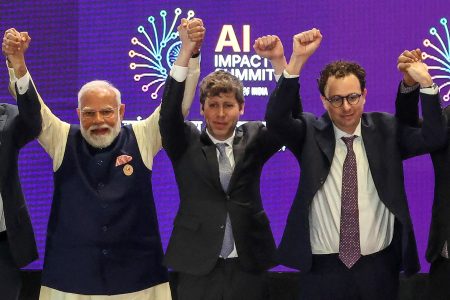
Mistral’s disclosure strategy differs significantly from that of its competitors. While OpenAI CEO Sam Altman recently claimed ChatGPT queries consume just 0.32 milliliters of water per request, the lack of a detailed methodology makes meaningful comparison difficult. This transparency gap presents opportunities for companies willing to provide comprehensive environmental data, allowing them to differentiate themselves competitively.
The audit establishes environmental transparency as a key differentiator in the enterprise AI market. As sustainability metrics increasingly influence procurement decisions, vendors providing detailed environmental impact data gain advantages in enterprise sales cycles. This transparency enables more sophisticated vendor evaluations that balance performance requirements against environmental costs.
For technology executives, Mistral’s audit provides decision-making criteria previously unavailable. Organizations can now factor environmental impact into AI procurement decisions, alongside traditional metrics such as performance and cost. The data enables more sophisticated total cost of ownership calculations that include environmental externalities.
Looking ahead, environmental performance may become as critical as computational performance in selecting AI vendors. Organizations that establish environmental accounting practices now position themselves advantageously as regulatory requirements expand and stakeholder scrutiny intensifies. The Mistral audit demonstrates that detailed environmental measurement is feasible, potentially making opacity from other vendors increasingly untenable in enterprise markets.
Read the full article here