



Who Dares Wins is a famous motto of the British Special Air Services (SAS), founded in 1941 just months after the London blitz nearly won the war for Nazi Germany. SAS remains today the model for elite military special forces around the world, including the U.S. Delta Force, France’s Le Commando Hubert, Israel’s Sayeret Matkal and the Philippines’ Light Reaction Regiment.
As a catchy jingle, Who Dares Wins is a winner, along with Nike’s Just Do It, Apple’s Think Different and De Beers’ A Diamond Is Forever. The best mottos stick in our brains but also speak a deeper truth. Who Dares Wins embodies the essence of bravery, resilience and the willingness to take risks. It captures the idea that bold people who step up, confront challenges and embrace uncertainty are the ones who achieve success and reap the rewards.
ADVERTISEMENT
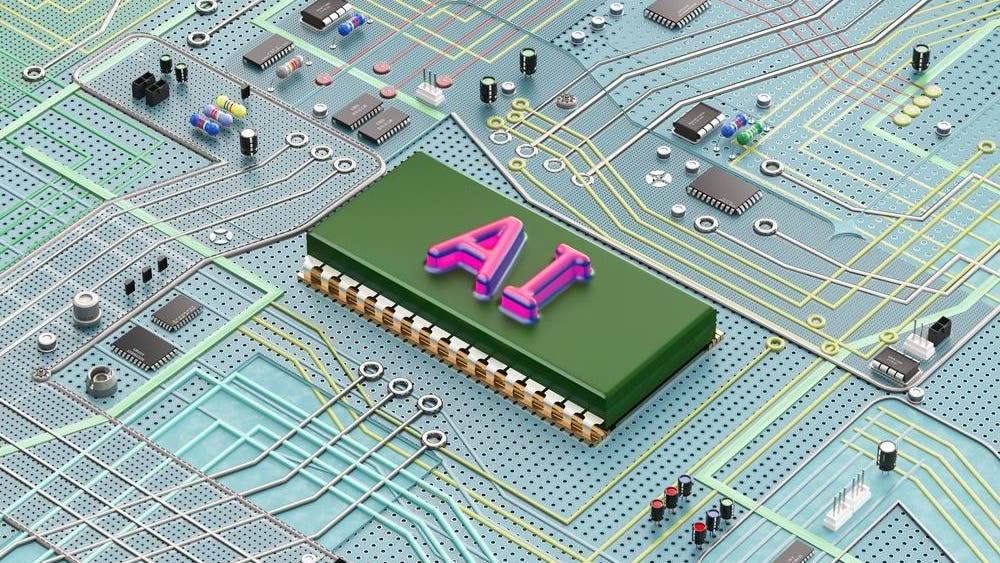
Here’s an idea. We need a motto for the Age of AI. Our motto must be catchy and motivational. To be credible, it must be deeply true.
Who Learns Fastest, Wins.
In his superb new book, Life After Capitalism, American economist and tech writer George Gilder shakes the pillars of economic orthodoxy with a new theory. Economics is not ultimately about supply and demand. Nor is it about resources and capital, or scarcity and abundance. These are ex post facto observations of the real story of economic change. The real story is about human creativity, curiosity, surprise, experimentation. It is chiefly about learning curves. Who learns fastest, wins.
This won’t be news to entrepreneurs and those who invest in them. Jack Ma did not command a bank vault of money or square miles of computer data centers when he and some friends started Alibaba in 1999 in a small apartment in Hangzhou, China. The company balance sheet was short of everything except Ma’s curiosity and ability to see a path forward through the fog of early Chinese e-commerce. Free listings proved to be Ma’s surprise discovery; it put Alibaba on a faster learning curve than its competitors.
ADVERTISEMENT
As writer Matt Ridley points out in his book, The Rational Optimist, Japan’s belief in economic orthodoxy in the early 20th century—that wealth grew out of resource abundance and self-sufficiency—almost destroyed the country by 1945. In its utter defeat, with physical resources and cash reserves gone, Japan turned to creativity, trade and learning. Japan’s rapid turnaround was a learning curve story. It remains one of the magnificent inspirations of economic history.
China, this column believes, is making a fundamental error similar to Japan’s in the early 20th century: the limiting belief that wealth is created by resource abundance and self-sufficiency. Wrong. If that were true, Argentina and Russia would be global colossi and Singapore and South Korea both poor. Wealth buys resources. Wealth is created from information, curiosity, surprise, rapid experimentation, relentless learning and market feedback.
Who learns fastest, wins.
AI is just the latest mass accelerant to learning. History is full of examples: the printing press, the scientific method, stock exchanges, telegraph and phones, radio and televisions, computers, software, search engines and smartphones. Now it’s so-called generative AI, as easy to use as a Google search bar. Each time there is a new accelerant to learning, the balance of economic value moves a bit farther from hard assets and a bit closer to information, surprise and learning curves.
ADVERTISEMENT
A top technology officer from Nvidia told me in May that technology’s improvement rate was now running three to five times faster than just ten years ago. If your company’s ability to learn and improve isn’t similarly accelerating, well, don’t let that happen. Who learns fastest, wins.
Read the full article here