




In a podcast with artificial intelligence researcher Lex Fridman, Sam Altman, the CEO of OpenAI, was asked to describe GPT-4, the latest version of the large language model powering various AI-based software. Here is what he said:
“It’s a system we will look back at and say it was a very early AI. It’s slow, it’s buggy and it doesn’t do a lot of things very well. But neither did the very earliest computers — and they still pointed a path to something that was going to be very important in our lives.”
The notion that something as advanced as GPT-4, which powers OpenAI’s ChatGPT, is only the beginning is hard for many people to wrap their heads around. In fact, people are already showing up to therapy with real concerns about what this early AI is doing to their well-being and how it might impact their future employment.
Here are two optimistic takes on the AI revolution that may help quell any AI-related stress and anxiety you may be experiencing.
1. Humans and AI Will Collaborate to Enhance Each Other’s Strengths
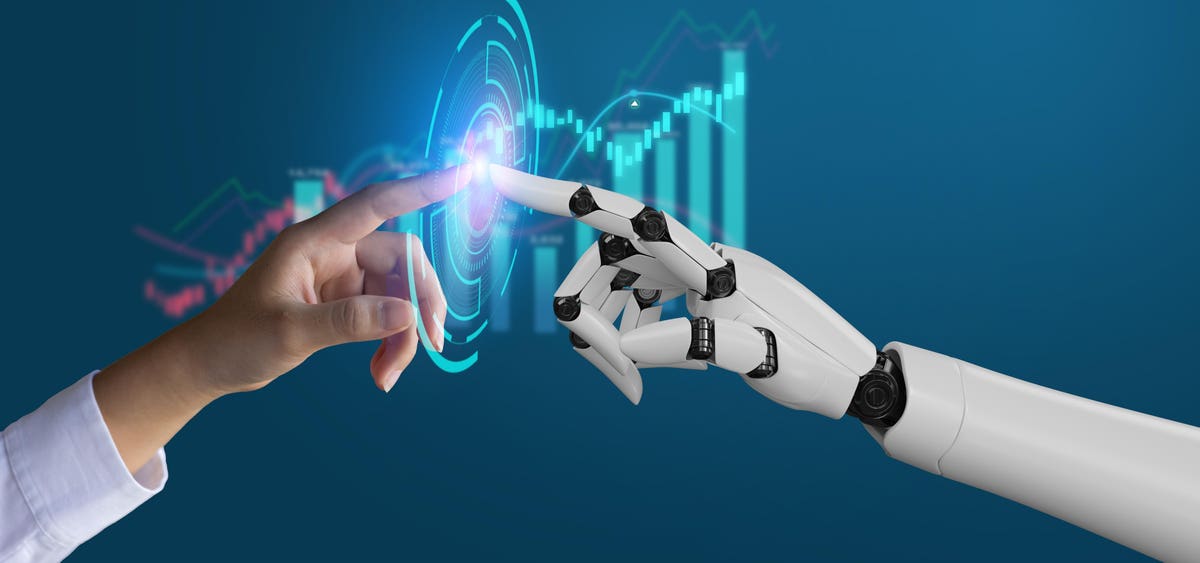
Let’s face it: As capable as our brains are, there are many things AI can do better than a human.
In 2021, the World Health Organization and the International Labor Organization jointly produced a study that attempted to understand the effects overworking had on people. The results were clear – people who worked for 55 or more hours a week had a 35% higher chance of experiencing a stroke and a 17% higher chance of dying from heart disease compared to people who worked the standard 35- to 40-hour work week.
And it’s not just our health that suffers. A 2014 Stanford University study found that working beyond 55 hours in a week does not result in much, if any, additional work being accomplished.
Contrast this with AI that has the potential to work around the clock with virtually no effects of fatigue, and produce work that is often indistinguishable, if not better, than what a human can produce.
In fact, a 2023 study published in Science Advances found that participants were unable to tell apart tweets written by GPT-3 and those written by a human. The study also discovered that, in many cases, the work produced by the model was far more accurate, owing to its advanced data-crunching and pattern-recognition abilities. (However, the study also warned that GPT-3 was also prone to producing information that, while believable, simply wasn’t true.)
All of this points to one likely scenario – AI and related technologies may displace some existing jobs, but they will also create many additional jobs, just as other past waves of technological innovation have done. Humans are essential to the functioning of the world we have created, and we will always have a purpose here.
According to a 2021 paper published in the International Journal of Human Resource Management, here are the most valuable skills you can hone to ensure you will not be redundant in a world where human-AI collaboration is the norm:
- Data analysis skills
- Digital competency
- Complex cognitive skills
- Decision making
- Continuous learning
2. The Wheels Are in Motion for AI Companies to Prioritize Safety, User Experience and Regulation in Product Development
One of the biggest fears plaguing leading technologists, who recently signed a letter to the U.S government about bringing in a moratorium if the AI race goes unchecked, is that AI is likely to go off the rails and harm us, intentionally or unintentionally.
In 2019, OpenAI themselves published a paper warning the world about the dangers of competitive pressures on AI companies that might cause them to deprioritize safety, security and social responsibility. To counter this likelihood, OpenAI has called for “cooperation in responsible AI development.”
Similarly, Microsoft published a paper in 2019 that validated 18 guidelines on human-AI interaction that is distilled from 20 years of research. The aim of this set of guidelines is to ensure the safety, reliability and trustworthiness of AI systems.
This gives us hope that there are many experts in the AI space that are spending time, money and energy trying to safely steer the inevitable AI revolution to become a boon, not a bane, for society. The role of psychologists and mental health professionals in shaping the development of AI is also being recognized, which is a move in the right direction.
Conclusion
Whether we like it or not, the genie is out of the bottle. Instead of spending time worrying about the course of AI development, perhaps we should focus on the little improvements generative AI like ChatGPT, Midjourney and other systems are bringing to our day-to-day lives and productivity. If you find yourself unable to deal with AI anxiety, reach out to a mental health practitioner who can help you process your thoughts.
Read the full article here