





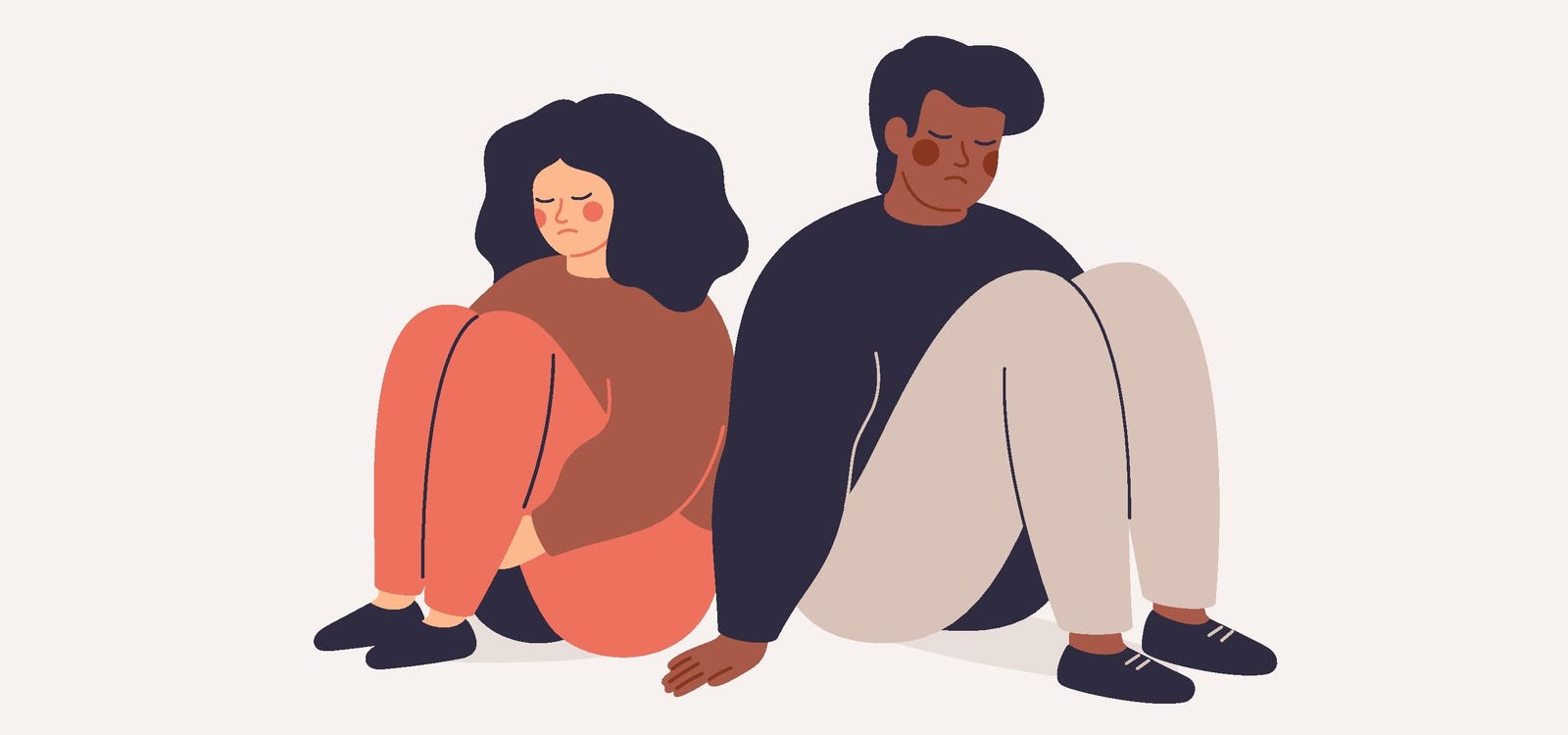
In relationships, there are times when we find ourselves holding on to something that no longer serves us. Whether it’s a romantic partnership, a friendship, or even a familial bond, the decision to let go can be incredibly challenging. This reluctance to end unhappy relationships can be attributed to various psychological biases and fears that influence our decision-making process.
Being stuck in an unhappy relationship can have profound effects on our mental, emotional, and even physical well-being. It can lead to chronic stress, anxiety, depression, and a general sense of dissatisfaction in life. Relationships that lack mutual respect, emotional support, and shared values can drain our energy. Moreover, remaining in an unhappy relationship can prevent us from seeking healthier connections and experiencing the fulfillment and happiness we deserve.
Here are three biases that may be clouding your judgment about your relationship.
#1. Sunk-cost fallacy (a.k.a., commitment bias)
One of the primary reasons individuals stay in unhappy relationships is the commitment bias. This bias refers to the tendency to continue investing in a failing endeavor, even when the costs outweigh the benefits.
In relationships, this bias manifests as a reluctance to let go because of the time, effort, and emotional energy we have already invested. We may hold on to the hope that things will improve, rationalizing that our past investment justifies our present suffering.
A study published in Evolution and Human Behaviour found that people tend to exhibit a higher level of commitment to their partners, even in the face of better alternatives. Even when it may not seem logical or rational or beneficial to stay in a relationship, individuals still feel a strong sense of commitment to a steady partner.
To overcome the escalation of commitment bias, here’s what you can do:
- A vital first step would be to assess the costs and benefits objectively
- Think whether the relationship is genuinely meeting your needs and adding any value to your relationships
- Don’t hesitate to fall back on a trusted support system for an outside perspective
#2. Preference for the familiar (a.k.a., status quo bias)
The status quo bias refers to a preference for maintaining the current state of affairs rather than initiating change, even when better options are available. Fear of change can be paralyzing. Therefore, even in the face of unhappiness, we may choose to endure a relationship and find comfort in the familiarity and stability it may seem to provide.
For instance, in a study published in Personality and Social Psychology Bulletin, participants were asked to indicate whether they would prefer staying with their current partner possessing traits possessing a specific set of traits (e.g., high trustworthiness and low attractiveness), or would they switch to an alternative partner possessing opposite traits. The results revealed that for most people, a specific trait (like attractiveness) only mattered insofar as it was possessed by the person they were already with, showing an overarching preference for their current partner than a specific desired trait.
The study listed several factors that played a role in this preference for the status quo.
- Some participants were worried about hurting their current partner’s feelings if they chose someone else
- Others wanted to avoid any uncertainty or confusion that might come with starting a new relationship. They preferred the familiar and predictable dynamics they had with their current partner.
- Sometimes, people saw their partner in a more positive light and viewed the alternatives as not as good as they actually were. This biased perception made them more inclined to stick with their current partner.
To overcome the status quo bias, it’s important to keep in mind the following:
- Challenge your comfort zone and welcome the possibility of change. Recognize that remaining in an unhappy relationship only perpetuates the status quo and prevents you from exploring new possibilities for happiness.
- Cultivate self-compassion and remind yourself that you deserve to be in a relationship that nurtures your well-being.
- Surround yourself with positive influences and seek the support of a therapist or counselor to help navigate the transition, if the need arises.
#3. Regret-aversion (a.k.a., omission-commission bias)
The omission-commission bias refers to our tendency to perceive the harm caused by action (commission) as more severe than the harm caused by inaction (omission).
In the context of relationships, this bias can make it difficult to leave an unhappy partnership because of the fear of making a mistake and ruminating about the potential consequences, such as hurting our partner’s feelings, facing judgment from others, or experiencing loneliness.
Findings of a study published in the Journal of Personality and Social Psychology, suggest that the experience of regret depends on the context and prior outcomes. When things are going well, individuals may regret taking unnecessary risks or disrupting a positive situation by acting. On the other hand, when previous outcomes were negative, people may regret not taking action and potentially missing out on opportunities for improvement or avoiding future negative consequences.
To overcome the omission-commission bias, consider the following:
- Re-frame your perspective on “regret.” You can think of regret as a reminder of the actions you have taken, which is a natural part of life and can be a potential catalyst for personal growth.
- Acknowledge that taking action and prioritizing your well-being is a courageous and necessary step towards personal growth and happiness.
Conclusion
Letting go of an unhappy relationship is undoubtedly a challenging decision to make, but it’s not impossible. When we’re emotionally invested in a relationship, our judgment to stay or exit can become clouded. Remember, you deserve to be in a relationship that brings joy and love, not constant stress and conflict.
Read the full article here