




The internet as we know it is changing. New web3 tools and platforms are arising that harness blockchain, NFTs and cryptocurrency. And thanks to metaverse technologies, online experiences are fast becoming much more immersive and realistic. In this future internet, web3, and metaverse technologies will transform how we engage with our favorite artists, musicians and sports stars. It’ll give us more immersive gaming and entertainment experiences and new ways of consuming art. It will alter creative industries forever.
Music is one creative industry that’s already being disrupted by metaverse and web3 technologies. Here are four major shifts taking place in the world of music.
Virtual performances
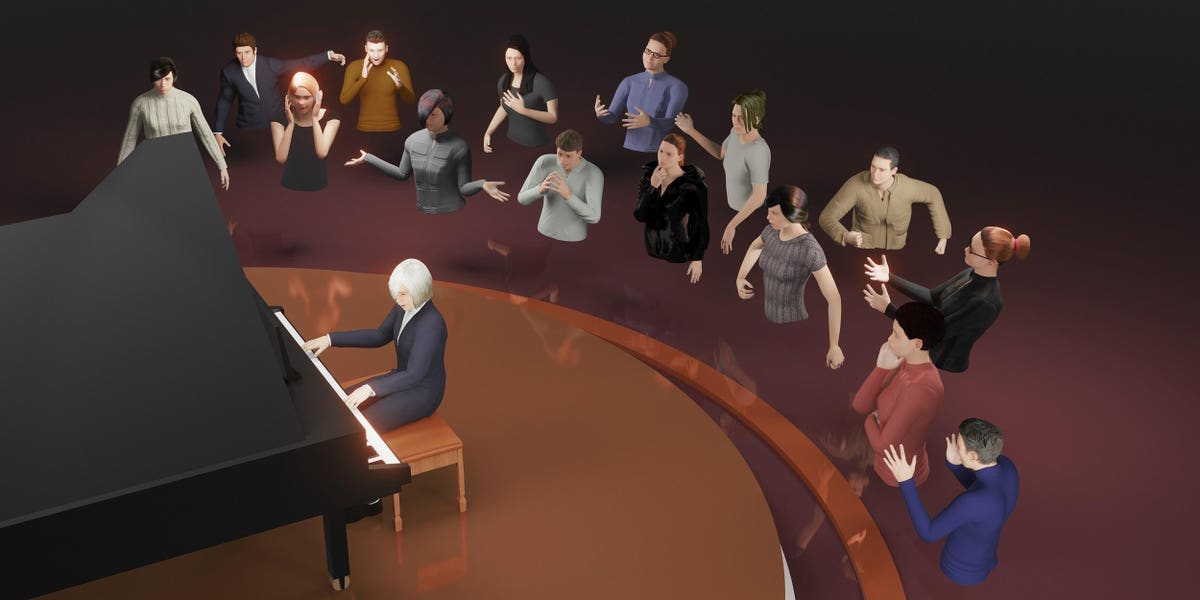
Imagine going to a concert with millions of other people. It would be impossible in the real world. Hellish, even. But it’s a breeze in the metaverse, as shown by Ariana Grande’s series of virtual Fortnite shows – which, over the course of several days, attracted an audience of 78 million. Virtual gigs like this, where the artist performs as a digital avatar, are becoming increasingly popular, providing an exciting way for artists to expand their audience. So much so that the MTV Video Music Awards have now introduced a “Best Metaverse Performance” category. Launched at the 2022 VMAs, the first award was won by K-pop band Blackpink.
Interestingly, digital avatars of pop stars are also making an appearance in the physical world. The ABBA show, ABBA Voyage, is a perfect example of this, featuring digital avatars (“ABBAtars”) of the foursome in their 1970s heyday, performing on stage backed by a real-life band and backing singers.
I’ve been lucky enough to go to the ABBA show, and I was honestly blown away. It feels like you’re watching the real ABBA perform on stage. Half-way through the show, my wife leaned over and told me this was going to “blow future concerts out of the water.” Take it from her, then: ABBA Voyage is a milestone moment in entertainment. Imagine where this technology could go in the future: gigs from long-deceased entertainers (either in physical locations or metaverse arenas); collaborations between artists who are on stage in a physical arena alongside hyper-realistic avatars of other artists; being able to watch the Beatles live in concert… It’s an exciting time to be a live music fan.
Popstars that only exist in the metaverse?
If we can enjoy a virtual show by a real-life star like Ariana Grande, why shouldn’t we enjoy a performance by an artist who doesn’t exist in the real world? Which brings us to the rise of metaverse popstars.
The appeal for fans is pretty clear. With a real-world performer, you can watch their videos, follow them on social media, and so on. But with a virtual popstar, fans can do all that and meet and interact with the star in the myriad of 3D, immersive worlds that make up the metaverse.
I can also see the appeal for the managers and companies behind the star. Digital popstars never get tired of endless promoting or touring. They’ll never say the wrong thing and generate a publicity nightmare. They’ll never demand an expensive rider. And they can be in lots of different virtual locations without ever getting jetlag – even appearing in multiple destinations at once. Metaverse popstar Polar, for example, was able to perform a concert in Latvia while simultaneously recording tracks for her debut album in London.
Boosting merch sales
When Swedish singer Zara Larsson began selling virtual merchandise on the Roblox gaming platform, she had no idea she would net more than $1 million in sales. What an incredible revenue stream this could provide for performers! But what sort of virtual merch are we talking about? It’s basically like buying in-game accessories for your virtual avatar – in Larsson’s case, fans could buy items like virtual hats, sunglasses, hairstyles, dance moves, and even a virtual likeness of the star.
Virtual products present big opportunities for brands and artists alike. When rapper Travis Scott performed in Fortnite, you’d better believe his brand partner Nike made sure Scott’s digital avatar wore Nike sneakers. But there are other ways for brands to collaborate with artists and take steps into the metaverse – sponsorship of virtual events, design collaborations on virtual clothing, and virtual product launches, to name just a few.
And as for artists, Larsson herself has said that virtual gigs and merch could provide a financial lifeline for performers as income from music sales dips. “Streaming services don’t pay the most,” she said, adding that making a seven-figure amount from platforms like Spotify or YouTube “would take a long, long time and hundreds and millions of streams.”
Music NFTs
Just as in art, NFTs are quickly making their way into the music industry. Think of NFTs as digital tokens or collectibles, and it’s easy to see how they could be leveraged in the music industry. Collectible album covers, NFTs of individual songs, membership to an exclusive fan club, digital versions of tickets to events … there are many ways NFTs could form part of a musician’s revenue stream. And the beauty of NFTs is if an NFT owner decides to resell their NFT, the original artist could get a cut of the resale.
All this has given rise to new decentralized platforms like Opulous, where artists can create and sell music NFTs without having to go through traditional middlemen. In other words, thanks to NFTs, artists can find new ways to monetize their work and engage with fans directly. But even traditional middlemen, such as record labels, are getting in on the NFT act. Warner Music, for example, is partnering with NFT marketplace OpenSea to provide a platform for Warner artists to launch their own NFT collections.
Read more about these topics in my new book, The Future Internet: How the Metaverse, Web 3.0, and Blockchain Will Transform Business and Society. And don’t forget to subscribe to my newsletter and follow me on Twitter, LinkedIn, and YouTube for more on the future trends in business and technology.
Read the full article here