





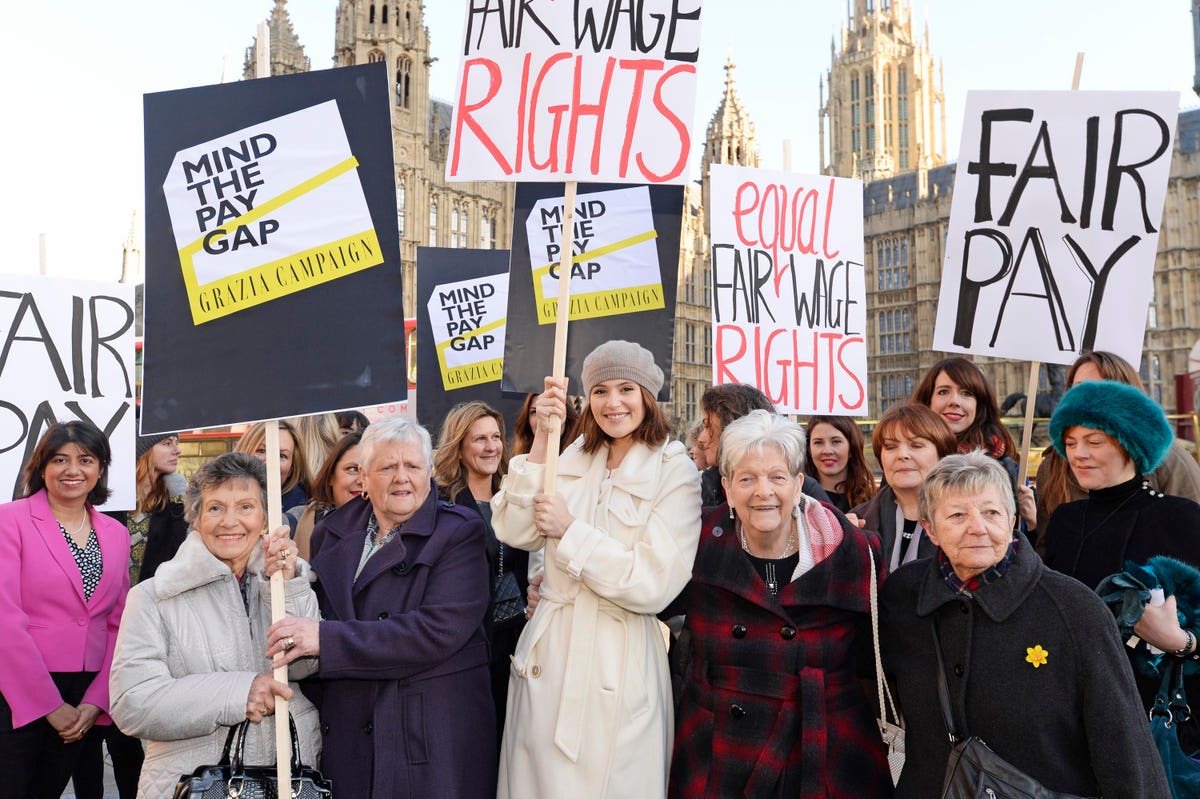
In spite of the passage of numerous pieces of legislation at the federal and state levels aimed at abolishing wage disparity based on sex, women continue to experience pay inequalities across virtually all industries. This persistent problem is particularly acute in healthcare. A recent Pew Research Center analysis showed that women were paid an average of 82% of what men earned in 2022. While the situation has improved since the first Equal Pay Act of 1963 was enacted, there’s been a leveling off in progress in the past two decades.
Worldwide women still face a 24% salary differential compared to men across the healthcare sector. This figure hasn’t budged much since the early 2000s.
The World Health Organization-led analysis examined data from 54 countries across all geographic and income regions. The study found the 24% gap after factoring in age, education and number of working hours.
What also stood out is that the gender pay difference is wider in higher income categories, where men are also over-represented, while women are disproportionately employed in lower wage jobs.
Given that women account for two-thirds of the global healthcare workforce, this suggests not only their underpayment but also the fact that they’re undervalued.
At 26%, for example, the gender income disparity for physicians in the U.S. is substantial. It is wider than in most other occupations. In absolute terms, women physicians earned nearly $110,000 less than their male counterparts, even when controlling for specialty, location and years of experience.
What makes these findings even more remarkable is that the number of female physicians has been consistently increasing over time. In addition, currently over 50% of medical students are women. Despite this growing representation, women continue to make considerably less money than men.
In some industry sectors there’s both a wage and gender employment discrepancy. My profession of economics is in particularly bad shape as far as female representation is concerned. This applies to all specialties, including health economics.
To illustrate just how dire the situation is, the percentage of women in full-time professor positions in research-oriented economics departments is an abysmal 10%, according to an Institute of Labor Economics study in 2018.
And even when we look more broadly across a larger sample of higher education institutions, which includes 238 universities and business schools, women hold just 25% of senior-level positions (full professor or associate professor) and 37% of junior-level positions.
Furthermore, in 2023 full-time female professors make 82 cents for every dollar their male counterparts earn.
One of the few bright spots in healthcare specifically is the retail pharmacy where salaries are practically at parity. Pharmacy continues to be a female-dominated profession with close to two-thirds of pharmacists comprised of women. It is one of just a handful of professions where the earnings differential between men and women is actually favors women. Pharmacy offers women an opportunity to combine a professional career with family as it is flexible regarding work on a part-time basis.
Given that October is National Pharmacy Month and October 12th is Women Pharmacist Day it’s a good time to remind ourselves of this success. Maybe it can be replicated in other professions within healthcare and outside the field.
Nevertheless, academic pharmacy mirrors what we observe across higher education. Here, academic pharmacy refers to researchers, lecturers and others who belong to a university faculty or a college of pharmacy. There’s a difference of more than $20,000 in salary at the associate professor level. Rather than narrowing, the pay gap based on sex has been surprisingly consistent since the early 2000s.
There aren’t any easy solutions to the problems identified in this article. Clearly, the passage of laws intended to establish equality haven’t helped nearly as much as they were designed to.
However, thanks to the work of the latest Nobel laureate in economics, Professor Claudia Goldin of Harvard University, we’re closer to finding out some of the reasons for the disparities. In turn, this may point us in the direction of where changes may be needed.
On Monday, Goldin was awarded the Nobel Memorial Prize in Economic Sciences “for having advanced our understanding of women’s labor market outcomes.” Her work uncovered key drivers behind the gender pay gap. These include lower rates of promotion and leadership advancement, often due to childrearing as women still bear the brunt of child care responsibilities.
To this day, studies estimate that women spend a disproportionate amount of their time undertaking unpaid work: Roughly three times as much care and domestic work as men.
According to Goldin, “men forgo time with their family and women often forgo their career.” This phenomenon hasn’t changed as much in the past several decades as one would have expected. In her research, Goldin found that most of the difference in earnings between men and women in the same occupation arises when women have children.
Certainly, better access to affordable child care could help ease the burden. Ultimately, however, it won’t be this simple. It may require a transformation of how society views part-time work. Also, it may necessitate a cultural shift away from ingrained behavioral patterns that have often led to men not pulling their weight in terms of child care obligations.
Read the full article here