





Topline
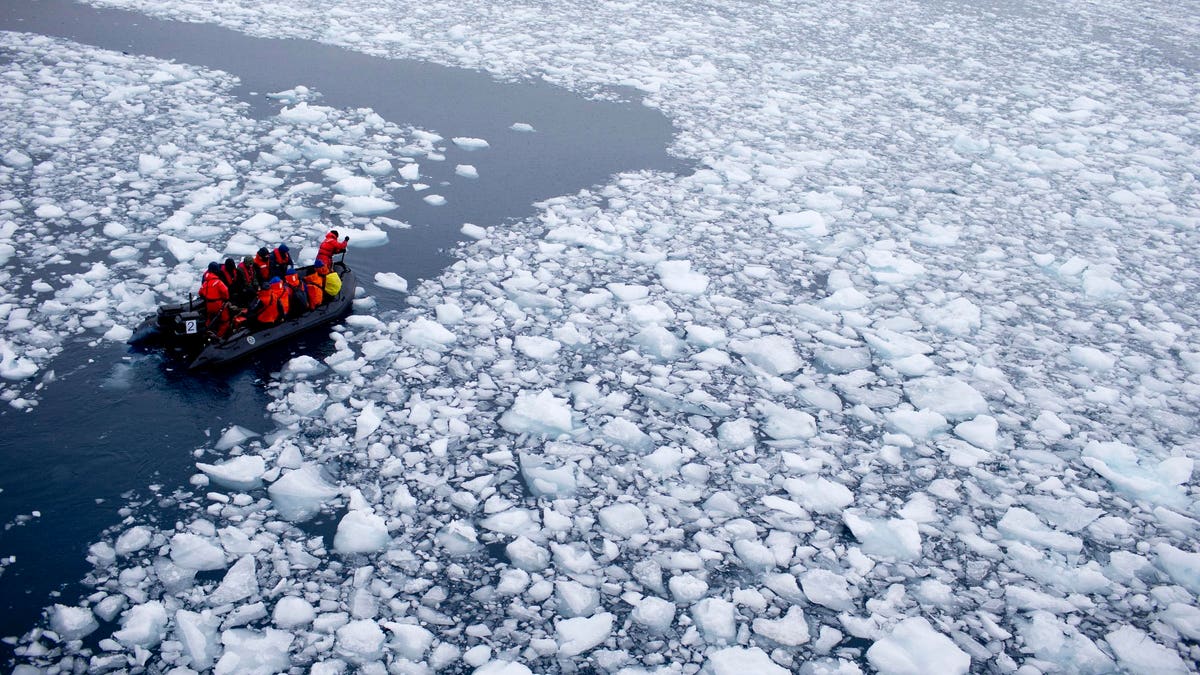
Antarctica—the world’s most untouched continent—is facing an uncertain future on oceanic, atmospheric, and ecological levels, according to a paper by researchers at the University of Exeter, as climate change causes bouts of extreme weather on the southernmost continent and makes its effects on sea levels and ecology felt across the world.
Key Facts
The paper—published in Frontiers in Environmental Science—offered a comprehensive review of past data and extreme weather events, and concluded that increasingly extreme and frequent weather events, such as ice loss and ocean heat waves, will be “virtually certain” in the Antarctic region.
Human-caused greenhouse gas emissions may have been behind the recent extreme weather in Antarctica, which included a record-breaking heat wave that brought temperatures 38.5°C above the season’s average to a single-day high of -10.1 °C or 13.8 °F at one point last year (yes, that’s hot for Antarctica).
Continued sea ice loss may lead to a potentially vicious cycle, the authors warned, as decreased ice size reduces Antarctica’s ability to deflect solar radiation and may contribute to accelerated melting; winter sea ice formation in the area this year has been the lowest on record, with almost one million square miles of ice missing.
Heating oceans may also be another culprit to further melting: warmer Circumpolar Deep Water (CDW), a current that sits 200 to 400 meters below the water’s surface, could quickly carve away at the underwater ice shelves and shear off parts of glaciers.
Higher water temperatures would also spell disaster to the region’s ecology—krill thrive in the 0.5°C and 1°C range, and past temperature bumps have triggered population crashes that impacted multiple levels of the food chain.
What To Watch For
The authors said greenhouse gas emissions will certainly contribute to more frequent extreme weather events in Antarctica, and urged policymakers to consider whether existing climate measures are sufficient to make good on international promises to protect the continent.
Key Background
The coldest place in the world isn’t what usually comes to mind when thinking about the heat waves and flooding that have ravaged cities and entire continents this summer. But Antarctica’s 5.3 million square mile glaciers make it the world’s largest ice source, and it plays a crucial role in deflecting sunlight and regulating ocean temperatures. If fully melted, its glaciers could unleash six million cubic miles of water, causing sea levels to rise by 200 feet. Meanwhile, the Atlantic Meridional Overturning Circulation (AMOC)—a crucial Atlantic current system that controls weather patterns and sustains marine life—is projected to collapse earlier than expected, revealing yet another natural process beginning to buckle. The continent is also home to a vibrant yet vulnerable marine ecosystem and its ice archives nearly a million years of deep climate history, making it an invaluable scientific resource. The region became a shared, internationally protected continent following the 1961 Antarctic Treaty, but is growing more fragile each year. Right now, the recent climate extremes in Antarctica is only a bellwether of what will soon be coming.
Tangent
A glacial lake outburst–which happens when water from melted glaciers breaks open fragile dams–flooded the Alaskan capital of Juneau last weekend. Water levels from the Mendenhall Lake reached a record 14.97 feet, destroying structures and prompting local evacuations. Glacial lake outbursts are only expected to increase in the future.
Key Number
34 million—that’s how long the Antarctic glaciers have been around for. The glaciers are currently contributing six times more mass to the world’s oceans than they were 30 years ago.
Read the full article here