





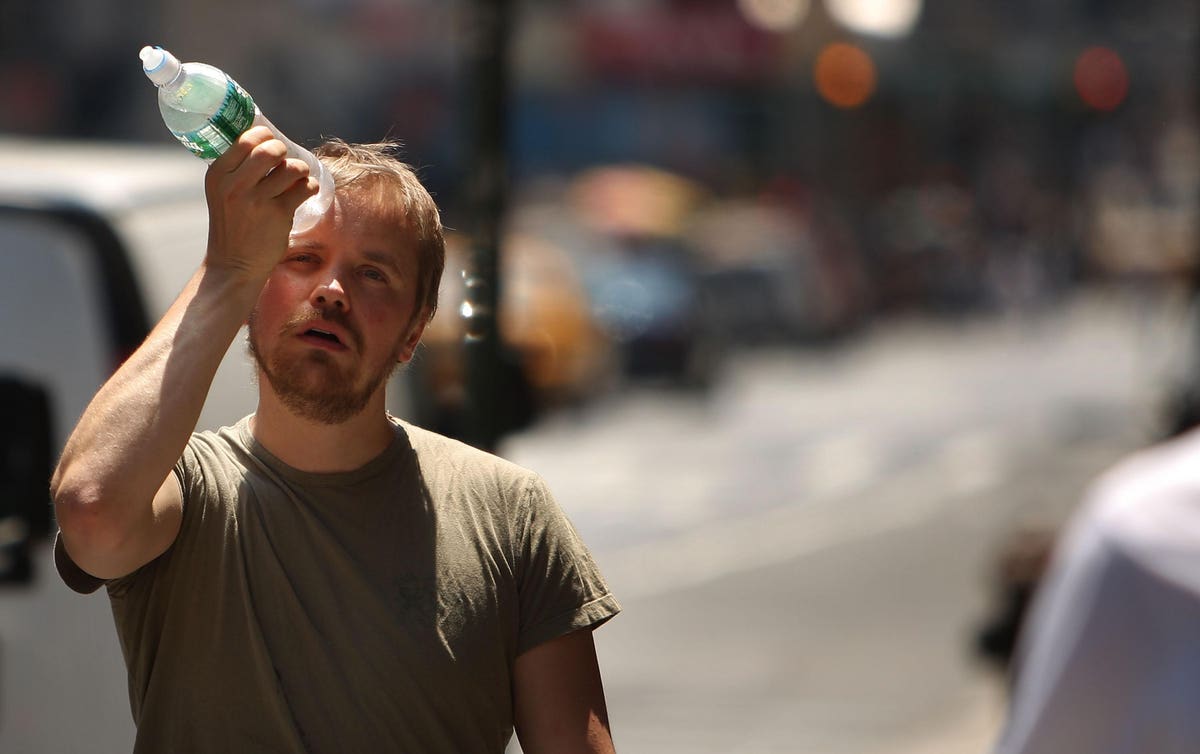
While cities are traditionally seen higher temperatures than rural areas, this summer’s record-breaking heatwaves have made the differences even starker, bring the concept of the urban heat island to the fore.
The concept refers to the notion that heat often becomes trapped, particularly at street level in congested and enclosed spaces.
This means people who live in cities often face higher temperatures, often both during the day and the night.
The question now is how can we alleviate the issue of urban heat, especially given the obvious health and climate implications.
According to the authors of new study published by Arup, city design is playing a major role in driving up urban temperatures.
Using AI and satellite images from space, Arup mapped the most extreme hot spots in a sample of the urban centres in major cities around the world.
Arup used its digital analytics tool to understand the difference in air temperatures experienced from neighbourhood to neighbourhood, on the hottest day in each city in 2022.
The authors are calling on city leaders, urban designers and planners to better understand how their designs can mitigate hot spots, particularly for the most vulnerable communities.
Arup’s nature positive design lead, Dima Zogheib said many major cities have “inadvertently” been designed to be hot.
“We’ve really pushed nature out in the past and concreted our streets and open spaces, and what we’re finding out more and more that nature has a big role to play in cooling our cities,” Zogheib told me.
She said nature-based solutions like increasing tree canopy coverage can help lower temperatures, as well as using more permeable surfaces for pavements and walkways.
Zogheib using greenery, solar panels or reflective materials on rooftops can also help reduce ambient temperatures, and planners need to make sure there are plenty of accessible open spaces.
She added it was important to consider the creation of “cool spaces” where people can get shelter and respite during any heatwaves.
And she said more thought must be given to how daily routines and working patterns may also have to change.
“If we look cities around the Mediterranean, they have adjusted their lives for centuries around the summer heat,” she told me.
“We need to reconsider working hours during heatwaves, like moving towards a more evening-based economy.”
The Arup study found Madrid’s urban centre has the most extreme urban heat island “hot spot” of six major cities it looked at around the world, with temperatures 15.5 degrees Fahrenheit hotter than in nearby rural surroundings.
The survey also showed Mumbai had the second most severe hot spot with an additional 12.5 degrees, while New York and London both saw hot spots of 8 degrees.
The study found in the majority of cities studied, the hottest spots had less than 6% vegetation cover, while the coolest spots in most cities had over 70% and were found almost entirely in parks, away from residential and commercial areas.
This contributed to massive temperature swings within individual cities.
Last month, the non-profit Climate Central published data which claimed the urban heat island effect means 41 million Americans are being exposed to significantly higher temperatures.
The study found nine cities are home to at least one million people in urban heat islands where temperatures are elevated by at least eight degrees Fahrenheit, including New York, Houston and Los Angeles.
In some neighborhoods, the urban heat island effect was found to boost temperatures by 10 degrees Fahrenheit or more, impacting more than 10-percent of residents in Chicago, New York City and Washington D.C.
Climate Central’s senior data analyst, Jen Brady said in an interview there is a growing sense that infrastructure and the way some cities are built may have to change in order to combat climate change and rising temperatures.
“In the more Northern part of the United States, the major goal was always to stay warm,” Brady told me.
“If a city trapped heat, that was seen as a positive thing,” she added.
“In warmer parts of the United States, the approach was fundamentally different, because they were not trying to stay warm. They used different building materials and lighter colours.”
She added there are plenty of solutions already out there to help bring urban temperatures down, from green roofs to different colour road surfaces.
“Hopefully, as we go forward with making changes in our cities, we will keep extreme heat in mind.”
And Jeff Terry, vice president sustainability at GAF said in an email that historically, U.S. cities were not designed with addressing urban heat as a priority.
Terry added that there’s no single solution that will address extreme heat, so he said it is important that metropolitan areas look at the impact of layering different solutions together across a community.
“Solutions like solar reflective pavement coatings, cool roof products, as well as increased tree cover and shading at a community-wide scale, offer a myriad of benefits and provide easier maintenance, but they are also the key to a more sustainable and more resilient future,” said Terry.
Read the full article here