




Startup DreamersStartup Dreamers
  • Home
  • Startup
  • Money & Finance
  • Starting a Business
    • Branding
    • Business Ideas
    • Business Models
    • Business Plans
    • Fundraising
  • Growing a Business
  • More
    • Innovation
    • Leadership
Trending

OpenAI Had Banned Military Use. The Pentagon Tested Its Models Through Microsoft Anyway

March 9, 2026

What AI Models for War Actually Look Like

March 8, 2026

Wall Street Has AI Psychosis

March 7, 2026
Facebook Twitter Instagram
  • Newsletter
  • Submit Articles
  • Privacy
  • Advertise
  • Contact
Facebook Twitter Instagram
Startup DreamersStartup Dreamers
  • Home
  • Startup
  • Money & Finance
  • Starting a Business
    • Branding
    • Business Ideas
    • Business Models
    • Business Plans
    • Fundraising
  • Growing a Business
  • More
    • Innovation
    • Leadership
Subscribe for Alerts
Startup DreamersStartup Dreamers
Home » Mercury Could Have Glaciers Where Life Exists, Say NASA Scientists
Innovation

Mercury Could Have Glaciers Where Life Exists, Say NASA Scientists

adminBy adminNovember 25, 20230 ViewsNo Comments3 Mins Read
Facebook Twitter Pinterest LinkedIn Tumblr Email

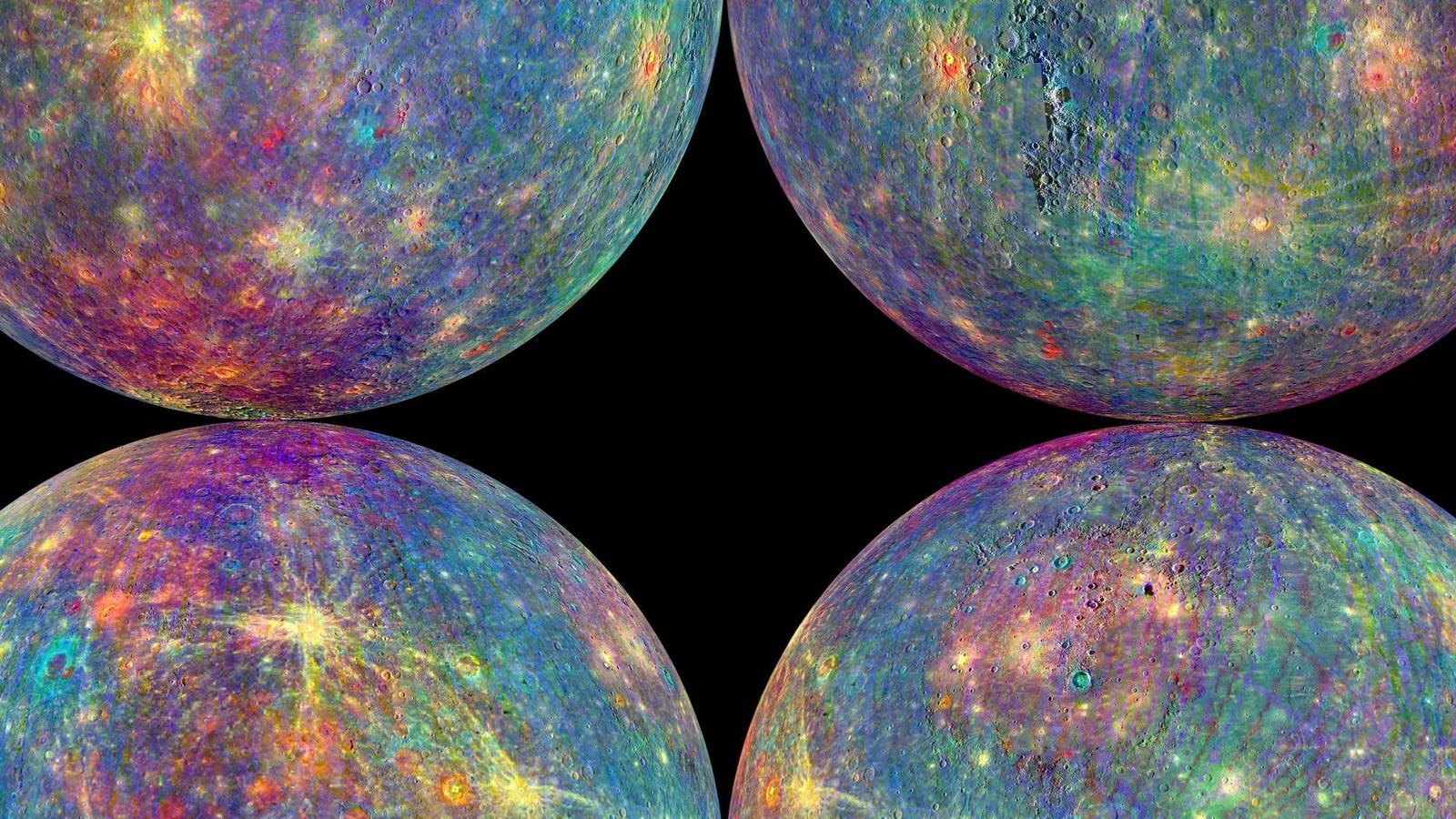
Scientists studying Mercury have discovered evidence for the existence of glaciers in the planet’s polar regions and suggested they could sustain life.

“This groundbreaking discovery of Mercurian glaciers extends our comprehension of the environmental parameters that could sustain life,” said Alexis Rodriguez, lead author of a paper published this week in the Planetary Science Journal.

The authors think glaciers—made of salt rather than water—may exist several miles under Mercury’s polar regions, which may contain “habitable niches” that resemble extreme environments on Earth. The research was partly funded by NASA’s Solar System Workings (SSW) Program.

The news comes a few weeks after scientists revealed that organics may exist on Jupiter’s moon, Ganymede, which is bigger than Mercury.

New Frontiers

If it’s true, the discovery of glaciers on Mercury opens up a new frontier in astrobiology, the study of life in the universe. As well as hinting that life could exist in extreme environments across the solar system, it also makes Mercury-like planets being discovered across the galaxy potentially habitable. Until now, Merucry has been thought to orbit far too close to the sun to contain life.

“Our finding complements other recent research showing that Pluto has nitrogen glaciers,” said Rodriguez, who added that glaciers may exist on the solar system’s hottest and coldest bodies. Pluto’s glaciers comprise frozen nitrogen.

Mercurian Glaciers

The glaciers thought to exist on Mercury are not like Earth’s. They are thought to have originated from the flow of salt and come from deep below the surface of Mercury, only revealed by asteroid strikes. It’s known that on Earth, specific salt compounds can create habitable niches in dead zones.

For example, despite salty, desiccated conditions, microbial life has been found in Chile’s high-altitude Atacama Desert. “This line of thinking leads us to ponder the possibility of subsurface areas on Mercury that might be more hospitable than its harsh surface,” said Rodriguez.

Goldilocks Zones

When astronomers find a new planet orbiting its star, they often declare whether it orbits in the star’s habitable zone where liquid water could exist on its surface—and not either boil away or freeze. This not-too-cold, not-too-hot region is sometimes called the “Goldilocks zone.” It’s thought that Mercury’s glaciers suggest a similar concept but within a planetary body. “In this case, the focus is on the right depth below the planet’s surface rather than the right distance from a star,” said Rodriguez.

The findings also doubt current interpretations of Mercury’s geological history, with one theory suggesting that the glaciers may have formed in water released from volcanoes.

Wishing you clear skies and wide eyes.

Read the full article here

Share. Facebook Twitter Pinterest LinkedIn Tumblr Email

Related Articles

The Dilemma Of Profits V.S. Guardrails

Innovation March 1, 2026

As Davos & India Celebrated AI, Paris Sounded The Alarm On AI Safety

Innovation February 28, 2026

Backyard Baseball Is Getting A New Game And I’m Ready For It In July

Innovation February 27, 2026

Solving The Data Bottleneck For Physical AI

Innovation February 26, 2026

Today’s Wordle #1686 Hints And Answer For Friday, January 30

Innovation January 30, 2026

Today’s Wordle #1685 Hints And Answer For Thursday, January 29

Innovation January 29, 2026
Add A Comment

Leave A Reply Cancel Reply

Editors Picks

OpenAI Had Banned Military Use. The Pentagon Tested Its Models Through Microsoft Anyway

March 9, 2026

What AI Models for War Actually Look Like

March 8, 2026

Wall Street Has AI Psychosis

March 7, 2026

Trump Imposes New Tariffs to Sidestep Supreme Court Ruling

March 5, 2026

Why Sierra the Supercomputer Had to Die

March 4, 2026

Latest Posts

AI Safety Meets the War Machine

March 2, 2026

Say Goodbye to the Undersea Cable That Made the Global Internet Possible

March 1, 2026

The Dilemma Of Profits V.S. Guardrails

March 1, 2026

‘Uncanny Valley’: Pentagon vs. ‘Woke’ Anthropic, Agentic vs. Mimetic, and Trump vs. State of the Union

February 28, 2026

As Davos & India Celebrated AI, Paris Sounded The Alarm On AI Safety

February 28, 2026
Advertisement
Demo

Startup Dreamers is your one-stop website for the latest news and updates about how to start a business, follow us now to get the news that matters to you.

Facebook Twitter Instagram Pinterest YouTube
Sections
  • Growing a Business
  • Innovation
  • Leadership
  • Money & Finance
  • Starting a Business
Trending Topics
  • Branding
  • Business Ideas
  • Business Models
  • Business Plans
  • Fundraising

Subscribe to Updates

Get the latest business and startup news and updates directly to your inbox.

© 2026 Startup Dreamers. All Rights Reserved.
  • Privacy Policy
  • Terms of use
  • Press Release
  • Advertise
  • Contact

Type above and press Enter to search. Press Esc to cancel.

GET $5000 NO CREDIT