




A recent study published in Thinking and Reasoning unveils an interesting paradox: the more confident we are in our abilities to discern truth from misinformation, the more likely we are to buy into falsehoods that cause us harm.
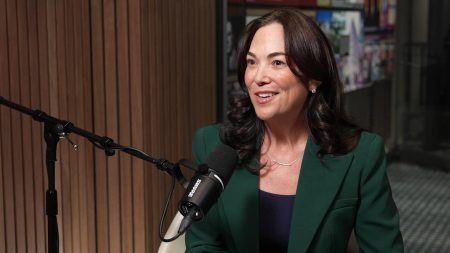
“My main interest is figuring out why reasonable people believe dumb things, which happens to all of us more times in our lives than we’d like to admit,” explained Shane Littrell of the University of Miami, the lead author of the study.
To learn how people fall victim to misleading information, referred to in the paper as bullshit, the researchers designed two studies.
The first study, conducted on 212 participants, involved analyzing how the participants’ actual ability to discern pseudo-profound bullshit, which is a specific type of bullshit that relies on profound-sounding terminology without actually saying anything meaningful, differed from their perceived ability to do so.
“We gave people a list of 10 pseudo-profound bullshit statements (e.g., “Hidden meaning transforms unparalleled abstract beauty”) and 10 real inspirational quotes (“A river cuts through a rock, not because of its power but its persistence”), and asked them to rate them as either “Profound” or “Not Profound.” From these ratings we were able to calculate a score representing each person’s ability to successfully discern bullshit from non-bullshit,” Littrell said.
After the completion of this task, the participants were asked three questions:
- How many do think you got right?
- What’s the average percentage of items everyone else got right?
- On a scale of 0 (much worse than everyone else) to 100 (much better than everyone else), how would you rate your ability to detect bullshit in your everyday life?
These questions provided the researchers insights into how overconfident the participants were about their bullshit-detection ability and also offered a look into how each participant felt their bullshit radar stacked up against others.
Based on the data collected from the first study, a distinct pattern emerged such that those who performed the worst overestimated their performance while those whose scores were highest underestimated their performance.
To understand why this might be, the researchers followed up with a second study.
Study 2, conducted on 201 participants, modified the procedure for Study 1 by adding an additional screen after each of the 20 statements to gather how the participants came to the conclusion of “Profound” or “Not Profound.”
Prior work in the field of information processing points to two types of thinking:
- Intuitive thinking, which is a fast and automatic type of thinking, often referred to as “going with our gut.”
- Reflective thinking, which is a slow, methodical and analytic type of thinking used for solving complex problems.
“Early research in this area hypothesized that people were more likely to fall for misinformation like bullshit and fake news mainly because they used intuitive thinking when evaluating the misinformation when they should’ve used reflective thinking,” Littrell recalled. “Our results from Study 2 of this paper showed that this isn’t necessarily the case. Some people actually do engage in reflective thinking when evaluating misinformation but then commit various reasoning errors when doing so.”
So, while some might instantly believe false information based on their gut feelings, others might talk themselves into believing in the misinformation after spending some time thinking about it. And then, there are still others who spend time thinking and are able to correctly identify the information as false.
Regardless of the type of thinking that was used, Littrell explained that those who were overconfident about their bullshit radar (feeling that it was better than average) had what the study terms as a “bullshit blindspot,” while those who underestimated their bullshit radar had “bullshit blindsight,” meaning that they actually were in a better position to discern misinformation.
“The overconfidence an individual may have in their ability to spot misinformation actually makes them even more likely to fall for it because it prevents them from engaging in the type of thinking they’d need to do to spot it in the first place,” Littrell added.
As for what one can do to avoid being fooled by bullshit, Littrell had this to say:
“Practice intellectual humility (i.e., accept the fact that you could be wrong) and make a habit of pumping your mental brakes when you encounter new information. I often encourage people to practice what I like to call ‘productive doubt,’ which is a type of skeptical mindset that leads you to check sources, do some factual digging, and verify the veracity of claims rather than just blindly accepting them. This is important to keep in mind when you’re on social media, and especially when the consequences for believing a claim would directly impact your health (or your family’s), your money, or your vote. When I encounter claims that seem a bit fishy to me, I kind of jokingly like to imagine that John Cena meme in the back of my head saying, ‘Are you sure about that?’”
A full interview with cognitive scientist Shane Littrell discussing his new research can be found here: How to sharpen your bullshit radar
Read the full article here