





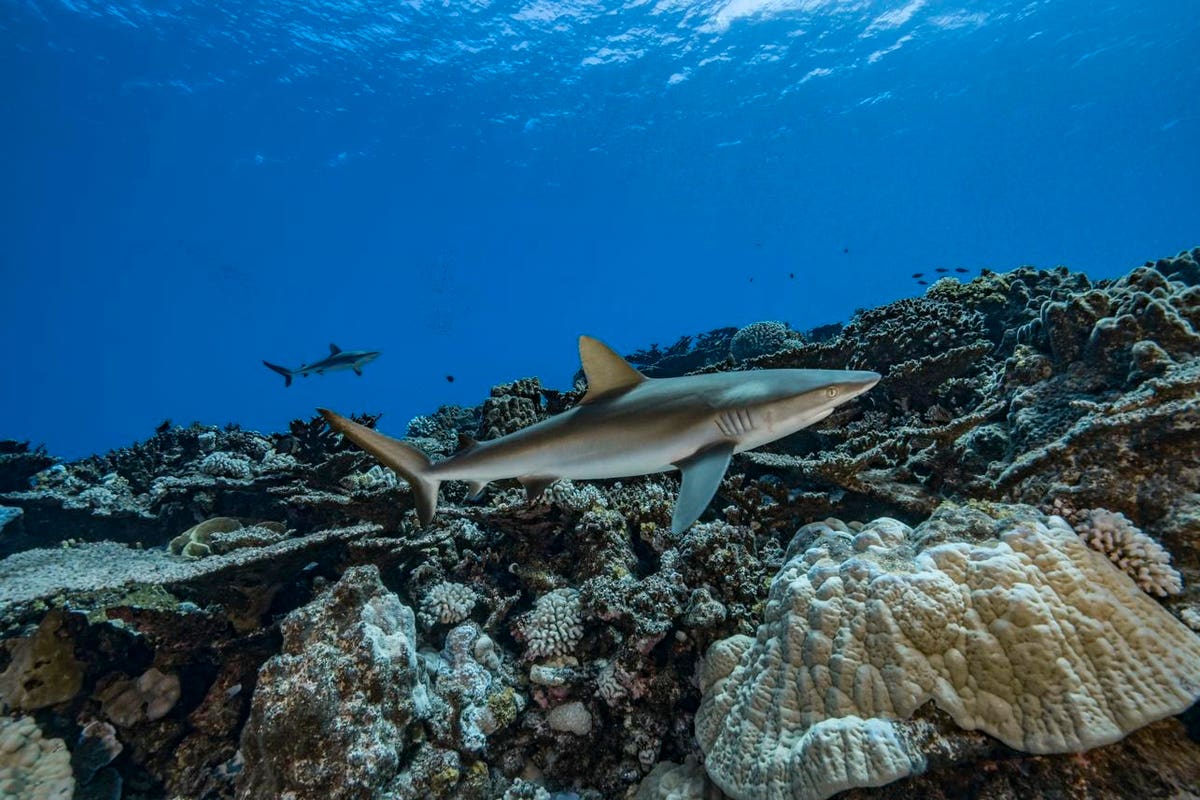
A new study published in Science has revealed that overfishing is not only pushing sharks towards extinction, but reef sharks in particular, with a global average decline of 63% in five main shark species living on coral reefs.
The study, conducted by the Global FinPrint project and led by researchers at Florida International University, utilized 22,000 hours of video footage from underwater video monitoring stations across 391 reefs in 67 nations and territories. The findings highlight that the five main shark species that live on coral reefs – grey reef (Carcharhinus amblyrhynchos), blacktip reef (Carcharhinus melanopterus), whitetip reef (Triaenodon obesus), nurse (Ginglymostoma cirratum) and Caribbean reef sharks (Carcharhinus perezii) are in a whole lot of trouble. “These are some of the best estimates of population decline of widespread shark species because of the very large number of reefs and countries sampled,” according to Colin Simpfendorfer, lead author of the study and adjunct professor of Marine and Aquaculture Science at James Cook University in Australia. “This tells us the problem for sharks on coral reefs is far worse and more widespread than anyone thought.”
The initial findings of this study prompted the reclassification of four of these species to higher threat categories on the IUCN Red List. Furthermore, these results were presented at the recent Conference of the Parties of CITES, leading to a groundbreaking decision to enhance trade regulations for these and over 50 other shark species, adopted by governments worldwide.
The final results indicate that widespread overfishing is not only driving reef sharks numbers down, it is also changing how coral reefs function, due to the important role they play in maintaining ecosystem balance. For example, reef sharks tend to occupy the apex predator position in the coral reef food chain. As top predators, they help regulate the populations of lower-level predators, such as smaller reef fish and mesopredators. This predator-prey relationship creates a trophic cascade, where the presence of sharks prevents the overabundance of lower-level predators, allowing the reef fish populations to thrive. When reef sharks are removed, this balance is disrupted, leading to potential overpopulation of lower-level predators and subsequent impacts on reef fish populations. These changes, the scientists stress, can result in altered species composition, reduced biodiversity, imbalances in predator-prey relationships, increased competition, and potentially negative impacts on coral reef health and resilience.
“People need healthy coral reefs,” said Mike Heithaus, co-author of the study and executive dean of FIU’s College of Arts, Sciences & Education. “We are seeing that when sharks disappear, that causes other changes in these ecosystems. Keeping shark populations healthy, or rebuilding them, is important for maintaining their roles for healthy reefs.”
Already the team has observed numerous reefs be stripped of both shark and ray species, or stripped of just shark species, leaving the ecosystem dominated by rays. The exception is Marine Protected Areas (MPAs), a defined region designated and managed for the long-term conservation of marine resources. These Marine Protected Areas have proven to be crucial in safeguarding shark populations, emphasizing the importance of conservation efforts. “While overfishing and poor governance is associated with the absence of these species, they are still common in MPAs and places where shark fishing was banned or highly regulated,” said Demian Chapman, lead scientist of Global FinPrint and director of the Sharks and Rays Conservation Program at Mote Marine Laboratory. Simpfendorfer concluded: “This study can be used to help identify those nations where such catches would be detrimental. We need to act now to stop widespread extinction of shark species in many parts of the world.”
Read the full article here