





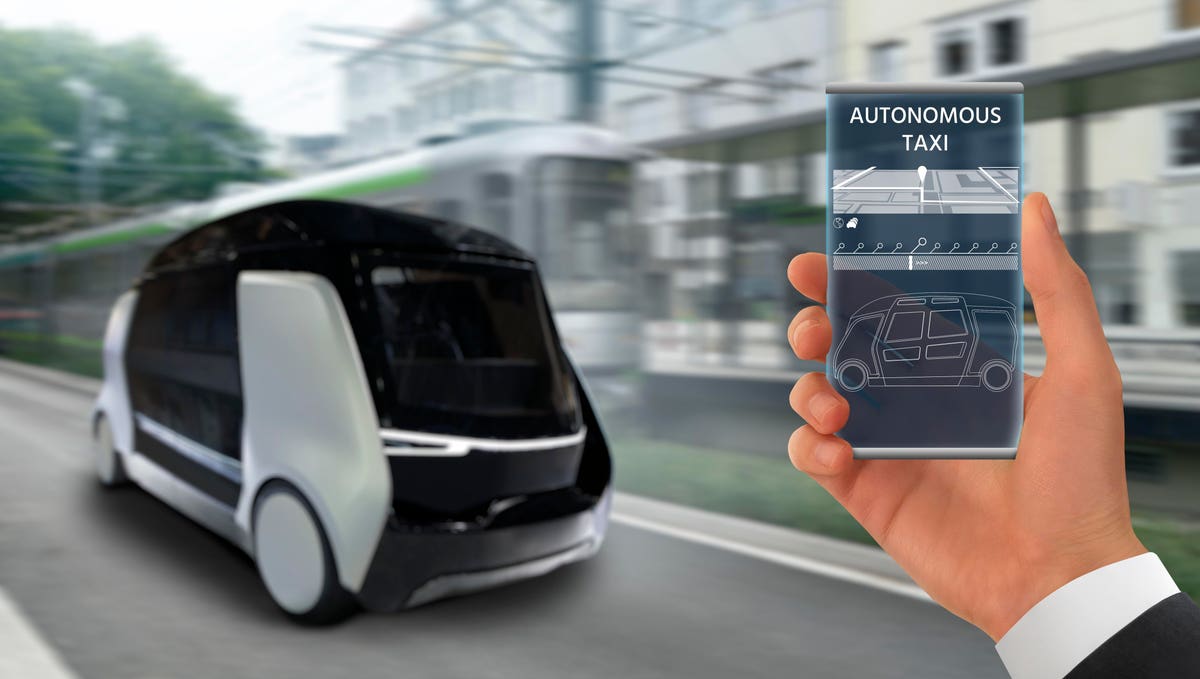
With the likes of Waymo, Tesla and Cruise continuing to invest heavily in driverless cars – future cityscapes that were once only conjured within the imaginitive realms of science fiction appear to be hurtling ever closer to becoming a brave new reality.
On the surface, autonomous vehicles would seem to be an intuitively disability-inclusive concept. After all, many individuals living with physical, sensory or cognitive disabilities are unable to drive and therefore benefit from the associated privilege and independence. Nevertheless, when it comes to incorporating people with disabilities into conversations and planning around autonomous cars, considerable hazards lie ahead.
This arises from the fact that self-driving vehicles are not a mature technology. As is often the case with any new and exciting technology where core precepts are yet to be established, there is a tendency for developers to want to race ahead in search of progress. With this, less mission-critical areas like accessibility become all too easily sidelined and relegated to the wrongful assumption of being able to be “figured out later.”
This is why early-stage research such as that recently undertaken by the University of Warwick’s Warwick Manufacturing Group into self-driving taxis that is currently being presented at the 26th IEEE International Conference on Intelligent Transportation Systems held in Bilboa, Spain is so vital. The research effort is particularly noteworthy for incorporating the perspectives of over 39,000 disability organization members including the Royal National Institute of Blind People and Cerebral Palsy Midlands.
Self-reliance
One interesting takeaway from the new research relates to the psychological benefits arising from a sense of freedom and independence passengers with disabilities would feel from being able to hire a self-driving taxi when compared to one operated by a human. This can easily be understood in the context of not being in any way reliant on another person. However, anybody with a disability with experience of routinely using existing taxi services will appreciate that it is more nuanced than that.
Simply put, hiring taxis and ride-sharing with a disability is commonly, at best, an unpredictable experience and, even after booking, actually receiving the ride is never guaranteed. Whilst some drivers will bend over backward to be helpful and courteous, many would appear to consider disabled riders to be a somewhat burdensome fare.
For those with visible disabilities such as being in a wheelchair or accompanied by a guide dog, it is certainly far from unheard of for drivers who are hailed to refuse to stop or, having taken a booking, to simply speed off once they spot the passenger if the opportunity is there to do so.
Shravani Sharma, Ph.D. of Warwick Manufacturing Group the lead author of the research entitled “Exploring the Impact of Autonomous Taxis on People with Disabilities” said in a media statement, “Our research highlights the current issues those with disabilities face when booking taxis—with many reporting that their trips have been canceled due to their use of a wheelchair. Drivers might feel the extra time wheelchairs add to journeys would reduce their earnings.”
Meanwhile, Dr. Roger Woodman, Head of Human Factors at the University of Warwick said, “Self-driving vehicles will open up driving to people that have never been on their own in a vehicle before. It has the potential to transform their lives — with reduced reliance on others to help them get from A to B.
“Driving is a very complex task to complete, so self-driving cars could enable someone with a disability, for example, cerebral palsy or tremors, to simply press a button and go.”
Ahead of the game
Nonetheless, embedding the requisite accessibility will, unlike the vehicles themselves, certainly not be an autonomous process or one that simply follows the natural design flow. It will need to be a very deliberate human-led endeavor to avoid, in the decades to come, self-driving taxis being even less accessible than their human-operated predecessors are today.
Examples of such accessibility pitfalls include devising appropriate entry, egress and clamping systems for wheelchairs, how the correct vehicle will be identifiable in crowded settings for visually impaired riders and the types of provisions that will need to be considered to make riding a safe and enjoyable experience for those with sensory processing disorders or learning disabilities.
Though satisfactorily attending to these issues may prove complex given the nuanced and individualized nature of disability – the basic starting point is far more simplistic.
In fact, with research projects like that of WMG, we’re almost there already. It is of course about copious codesign alongside people with disabilities and their representative organizations to ensure that accessibility is baked in from the start and not a costly retrofitting exercise that occurs at a later date.
Sharma could not have summarized more succinctly when she said, “”Self-driving taxis could provide those with disabilities more freedom and reduce fear of discrimination. So, it’s crucial we listen to their opinions in developing the technology.”
Read the full article here