




Although we often hear warnings that future wars will be fought over water, for thousands of years wars have often been fought with water. This is the second in a two-part series on how rivers have been used as weapons in war – and how decision makers can learn lessons from these examples to keep people safe in a world of growing risk.
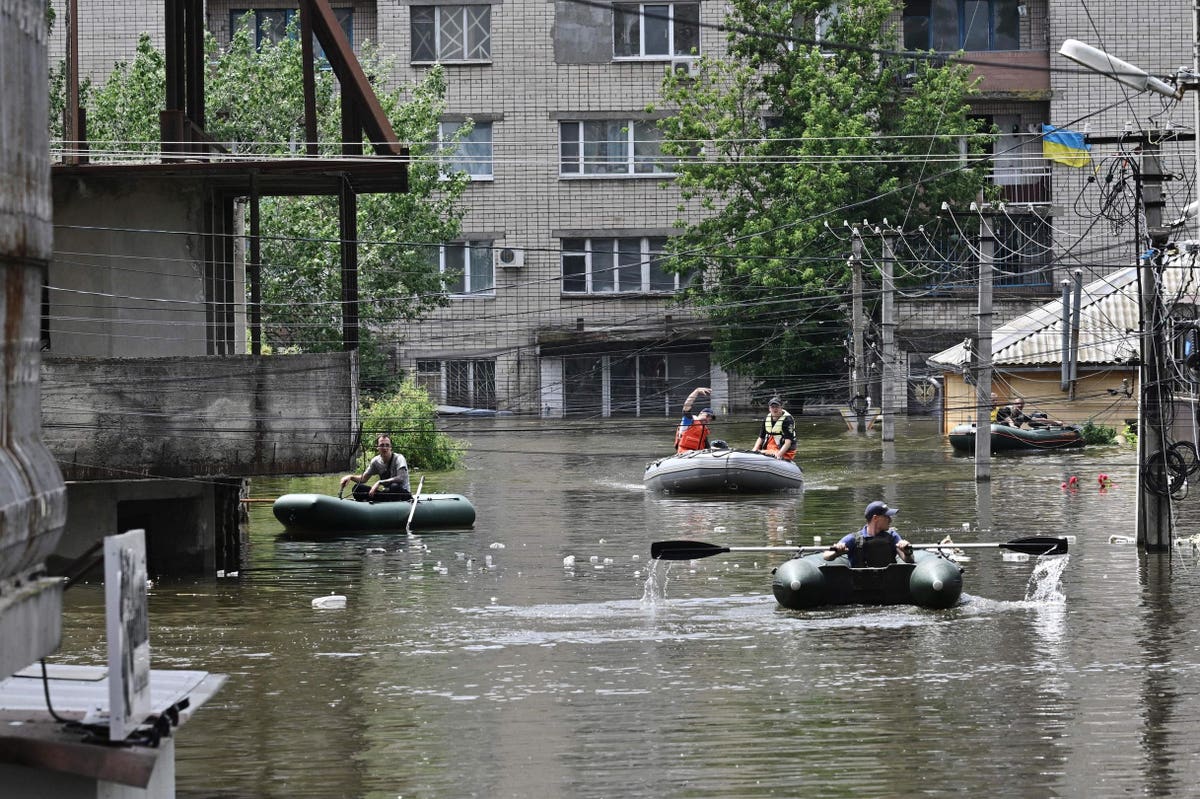
The first post explored how rivers have been used as weapons, with examples from both China and the Roman Empire dating back to least 200 BCE. In both of these battles, armies built a temporary dam and then destroyed it to send a wall of water down on their opponent. The most recent example occurred just last month with the breaching of the Kakhovka Dam on Ukraine’s Dnipro River causing widespread flooding on cities downstream.
In addition to the breaching of dams, armies have intentionally destroyed levees flanking rivers to flood large areas to prevent the advance of an opposing army, essentially “using water as a substitute for soldiers.” Armies have also re-routed rivers to cause artificial droughts, denying their opponents the defensive advantages of a flowing river or extensive wetlands.
These examples illustrate the danger, disruption and displacement that follow from sudden shifts in water availability (too little, too much) and particularly from the (intentional) failure of the infrastructure used to manage rivers.
These disasters were intentionally inflicted during war. However, the key lesson for decision makers is that they are essentially the same disasters that are becoming more likely due to climate change.
Consider dam failure. A rapidly changing climate is pushing hydrological patterns into uncharted territory for dams worldwide. Warmer air can hold more moisture, resulting in more intense storms with heavier rainfall causing higher flood levels. An analysis by Climate Central found that 72% of nearly 250 locations around the United States are already experiencing more intense rainfall events than they did in 1950. In May of 2020, between four and seven inches of rain drenched central Michigan over a two-day period, resulting in flooding that led to the collapse of two hydropower dams and the evacuation of more than 10,000 people downstream as downtown Midland, Michigan was inundated by nearly 10 feet of water.
In 2017, California’s Oroville Dam, the tallest dam in North America, came close to failing—unleashing what would have been a disastrous flood for hundreds of thousands of people living downstream—due to record-breaking precipitation and runoff. I recently led research showing that while only 4% of existing hydropower dams are in regions with the highest flood risk, by 2050 that proportion will increase five times, to 20%, due to projected climate change driving increases in flood magnitudes across much of the world.
There are a number of steps we can take to reduce risks associated with dam failure, including retrofitting spillways to safely pass larger floods, managing watersheds to reduce runoff, integrating better monitoring and forecasting into dam operations, and removing aging and obsolete dams (which will also restore rivers). Similarly, countries can adapt to increasing flood risk by giving rivers more room to spread out, avoiding new development in areas at risk of flooding, and prioritizing maintenance and rehabilitation of infrastructure, such as dams and levees, that are crucial to protecting communities.
However, to date, governments are investing only a fraction of what is needed to help countries safely adapt to even the best-case scenarios of climate change. The United Nations estimates that current annual investments in adaptation are only 5-10% of what is needed.
Further, beyond a gap in spending for future adaptation, many countries have considerable backlogs for maintaining crucial existing infrastructure. For example, the American Society of Civil Engineers gives a letter grade of “D” to both dams and levees in the United States, noting that rehabilitating dams and levees to maintain their safety will require more than $100 billion in investment.
For thousands of years—most recently with multiple examples from Ukraine—combatants have used water as a weapon, exploiting societies’ vulnerabilities to floods and droughts. By doing so, these tactics hold up a cracked mirror that reflects the value of water: crucial to society’s functioning when managed within safe boundaries, destructive when there is too little or too much of it.
The intentional war-time destruction of dams and levees should serve as a wake-up call that climate change will increasingly push the earth’s hydrological forces of rainfall and runoff into the role played by these combatants: degrading infrastructure, releasing the pent-up energy of rivers, and inflicting harm on vulnerable populations.
Meeting our climate targets will maintain risk within more manageable boundaries. However, hydrological patterns have already intensified—and will continue to intensify, even if we achieve our climate goals—such that investment in adaptation will still be required. Governments will need to ramp up funding for maintenance of existing infrastructure and to fill the gap in adaptation investment, including meeting previous commitments from wealthy countries to provide $100 billion for adaptation in lower income countries.
The global scale of that climate-driven risk to rivers and infrastructure is daunting, but there is still time to pursue a more peaceful trajectory.
Read the full article here