





This article was co-authored by David Carlin, Lead Expert on Climate Risk at the UN Environment Programme- Finance Initiative (UNEP FI) and Laxmi Aeshwarya Kumar, Project Specialist & Lead at UNEP FI
The world is in the grips of a scorching summer. July has been the hottest month ever recorded. In parts of the Middle East, heat indices soared into the upper 60s °C.
Combatting climate breakdown demands urgent action across all economic sectors and countries. However, a sole focus on climate will not be enough. Effective climate action must consider the interconnections between the climate system and the environment as a whole, such as biodiversity loss, ecosystem destruction, pollution, and deforestation.
And global leaders are increasingly recognizing the critical relationship between climate and nature. In the past year, numerous international legal frameworks and historic treaties have been adopted or are under negotiation including the Kunming-Montreal Global Biodiversity Framework, the UN Oceans Treaty or the Plastics Treaty. These efforts are an explicit acknowledgment that a sustainable future demands a livable environment.
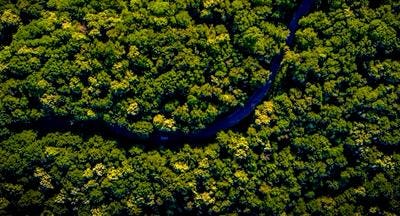
Stakes were also high at the Amazon Summit this past week – the first summit bringing together eight Amazon nations in fourteen years to focus on preserving the imperiled rainforest, a critical carbon sink and a habitat for over three million species. Hosted by Brazil, which has seen a significant decline in deforestation in the past months, the summit covered topics ranging from fighting organized environmental crime to sustainable and inclusive development. The two-day summit concluded with a declaration inter alia to combat deforestation and the acknowledgement of Indigenous knowledge as a condition for nature conservation.
The summit signals that leaders are becoming attuned to threats of environmental breakdown and the need to transition to a climate and nature-positive economy, but more comprehensive and faster progress is needed. While government bodies must pursue ambitious policies, we also have to leverage the power of multinational corporations and global finance. Because whether indented or not – every investment has impacts on sustainability outcomes – positive or negative.
And ultimately what we want to do is to shift private capital away from unsustainable production and consumption (reduce negative impacts) to sustainable business models (increase positive impacts) – and there is a business case for doing so.
The business imperative
First, new legal frameworks are emerging globally, emphasizing the importance of sustainable business practices. For instance, the EU’s Corporate Sustainability Due Diligence Directive (CSDDD), adopted recently, mandates corporations to manage their impacts on human rights and the environment throughout their supply chains. Additionally, the Corporate Sustainability Reporting Directive (CSRD) now requires large corporations and listed SMEs to consistently disclose reports on social and environmental risks, including their mitigation strategies, in line with the European Sustainability Reporting Standards (ESRS). These developments point towards heightened attention to responsible business conduct in future moving away from the once rather voluntary standards to mandatory rules.
Second, the foundation of businesses and the global financial system is dependent on the health and viability of our natural ecosystems. Issues related to sustainability, such as resource shortages or extreme climatic events, can jeopardize business continuity and the stability of the financial system. Some of these challenges have the potential to be systemic, threatening the collapse of entire markets or the financial system as whole. It is now unequivocal that the risks for long-term damage to our natural systems and by extension also the businesses that depend on them outweigh any short-term profits gained through the destruction of our planet.
Third, managing sustainability impacts offers businesses a dual advantage: fostering innovation and achieving cost-efficiency. Research consistently shows a rising consumer preference for socially and environmentally responsible products and services. Catering to these evolving demands not only aids in retaining existing clients but also provides businesses with avenues to broaden their customer base, explore new opportunities, and enter new markets. What was once viewed as a mere ‘nice to have’ has now become integral to the reputation and operational success of businesses.
There are various ways in which businesses can positively contribute to sustainability outcomes. These range from rethinking supply chains and directing capital towards activities that promote nature restoration to engaging directly with key stakeholders for collaborative ways to advance environmental goals. It will depend on the business and individual circumstances to determine which strategy will be most suitable but generally, there is a broad array of options for creating positive impacts.
The UN, through its agencies/programmes such as the United Nations Environment Programme Finance Initiative (UNEP FI) offers resources for private sector actors looking to advance sustainability. For example, A Legal Framework for Impact, a joint project between the Principles for Responsible Investment, the Generation Foundation and UNEP FI supports investors in fulfilling their existing legal duties while considering sustainability impact objectives. Other active programmes include the Principles for Responsible Banking (PRB), the Impact Programme, and the Climate and Nature Risk Pilots.
Moving forward together
Despite falling short of specific key targets, the recently concluded Amazon summit sparks hope for more concerted action by rainforest nations going forward. These governmental actions will be vital to preserve this unique ecosystem and the home of over 400 indigenous tribes. However, the Amazon and the planet cannot wait for government action alone.
There is an essential role for the private sector both in complementing and bolstering government policies. Sustainable businesses will be ones that pursue interconnected strategies on climate and nature. Doing so will enable them to identify new opportunities, manage their risks, and support the communities in which they operate.
Read the full article here