





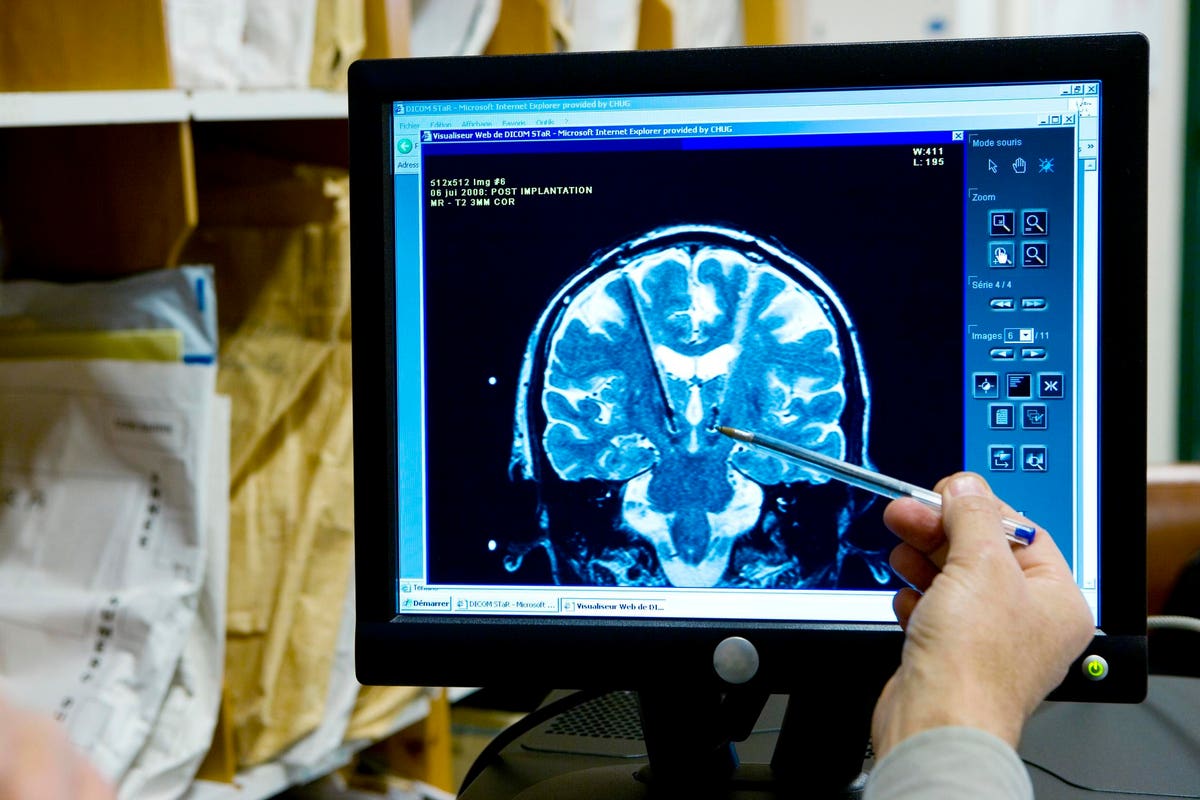
Deep brain stimulation is a surgically implantable medical device that selectively electrically stimulates the brain to treat certain types of neurological movement disorders such as Parkinson’s disease and dystonia. In some cases, it is also being used to treat mental health conditions such as depression and obsessive compulsive disorders. Existing technologies necessitate a doctor to properly insert and periodically review and adjust stimulation parameters such as the amount and intensity of the stimulating current across the electrodes that make up the device. But in a commentary published in Nature Reviews Neurology this week, the authors review and speculate about how artificial intelligence could improve deep brain stimulation functional outcomes for patients.
What is Deep Brain Stimulation?
Deep brain stimulation uses a device called a neurostimulator to send small electrical currents to specific populations of neurons in key areas of the brain. These electrical impulses help regulate abnormal brain signals and improve symptoms, oftentimes with dramatic effects to patients that results in significant improvements in quality of life. It doesn’t cure the condition but can greatly reduce symptoms, including tremors and stiffness. It’s also reversible, so if it doesn’t work or causes unintended side effects, the electrodes can be turned off and removed.
How Machine Learning and AI are Improving Deep Brain Stimulation
There are two main ways in which researchers are investigating how AI can be used to improve deep brain stimulation. The first is facilitating target localization, which involves determining the optimal location for electrode placement within the brain by properly identifying anatomical landmarks using medical imaging methods such as magnetic resonance imaging, or MRI. On-going research is investigating how machine learning and AI can help better identify, in particular, small anatomical targets in order to improve the precision of implantations.
In addition, machine learning and AI are also being used to improve and enhance medical imaging methods such as MRI themselves. This would further improve the use of other AI specific for target localization. And, of course, it would have many other applications for imaging the brain beyond deep brain stimulation with important benefits to neurology and neuroscience.
The second way the use of AI is being explored with deep brain stimulation is in selecting electrical stimulation parameters. Post-implantation, proper selection and continued adjustment of stimulation parameters is critical to the functional outcome for patients.
Traditional methods for programming and adjusting electrical stimulation parameters are time-consuming and rely on the skills and experience of the programmer. Automated or partially automated programming using AI that takes advantage of imaging, electrophysiology, and clinical data, is being explored as a more efficient alternative. For example, in one study, machine learning models were trained using functional MRI data from one group of patients to predict optimal stimulation parameter settings for another group of patients.
Conventional deep brain stimulation involves stimulating targeted brain regions with constant electrical parameters that can only be adjusted during hospital visits. But taking the integration of deep brain stimulation with AI one step further, there is growing interest in developing closed-loop or adaptive systems that can adjust stimulation parameters based on the patient’s condition or activity in near real-time ‘on-the-fly’. For example, the needs of a patient may vary depending on the time of day or what the patient is doing. In some cases, stimulation parameters may need to be updated as a disease progresses. Machine learning could enable more complex parameter adjustments by integrating a broader range of information that takes advantage of feedback-loops from the patient to the device, and back to the patient with an adjusted set of stimulation parameters.
All of this is on-going research and much work needs to be done. But the future impact on the quality of life of the patients and their families could be very significant.
Read the full article here