




The recent collision between Silicon Valley’s ethical ambitions and the Pentagon’s national security imperatives has sent shockwaves through the tech industry. When OpenAI secured a contract with the Pentagon just as Anthropic faced federal ousting for refusing to loosen its “constitutional” guardrails, it signaled the necessity of a specialized industrial complex for AI safety.
OpenAI-Pentagon deal serves as a catalyst for five transformative shifts that will shape the future trajectory of AI development.
1. Moving from Internal Ethics to External Security
For years, companies like Anthropic have navigated a conundrum of conscience, caught between their founding mission of safe alignment and the massive contracts. However, the standoff between Anthropic CEO Dario Amodei and the Pentagon proves that a single company cannot be both the developer of the world’s most powerful weapon and its own independent regulator.
This creates a vacuum for third-party safety partners. By acting as third-party partners to both the government and AI labs, safety startups such as Multifactor, Contextfort, Alter, and among others, can provide the safety layer that the LLMs or AI agents themselves cannot objectively maintain. This allows the giants to focus on building powerful brains, while the safety firms provide the specialized helmets and armor.
2. Standardizing the Wild West
Currently, AI Safety is a nebulous term, varying wildly between OpenAI’s Preparedness Framework and the EU’s AI Act. By demanding “all legal use” clauses, the U.S. government is inadvertently creating a demand for internationally recognized safety criteria.
Safety startups now have the chance to move beyond consulting and toward standard-setting. Companies that develop automated safety-benchmarking tools—capable of certifying a model for Zero-Trust environments could see their protocols adopted as the industry standard. Much like ISO certifications in manufacturing, these safety benchmarks will allow AI companies to grow by providing a clear, verifiable roadmap for public-private partnerships.
3. The Antivirus for Your AI Agents
We are moving from chatbots to AI Agents that can actually do things, like creating an app, conduct business analysis, booking travels, or manage calendars. But as they get more powerful, they get more dangerous. The recent OpenClaw incident, where an AI agent accidentally wiped out a Meta researcher’s entire email history, proves that AI needs a safety switch.
This incident highlights an undervalued market: AI safety as a system utility. When AI agents and multi modal AI become increasingly powerful, AI safety tools have the potential to be as ubiquitous as antivirus or firewall software. These tools will run locally on every computer, monitoring agentic behavior in real-time, detecting where an AI loses its original instructions, and providing a physical kill switch that current autonomous systems lack.
4. Specialized Safety for High-Stakes Sectors
A one-size-fits-all safety filter doesn’t work. A self-driving car needs a different safety protocol than an AI agent handling sensitive HR documents or a robot in a factory.
The next big growth point is specialized AI safety. We may see companies that specialize exclusively in:
- FinTech Safety: Preventing AI-driven market crashes or fraud.
- Medical Safety: Ensuring AI agents don’t violate patient privacy or give lethal advice.
- Physical Safety: Hardening the code for autonomous vehicles and robotics to ensure they never prioritize a task over a human life.
By focusing on these niches, safety companies can become irreplaceable components of the deployment stack, providing the hardened shells necessary for high-stakes industries to trust autonomous technology.
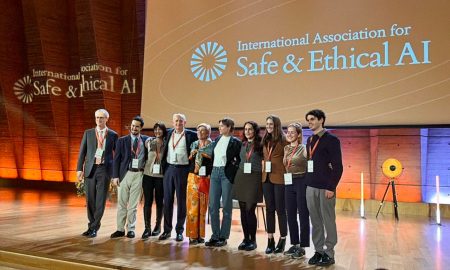
5. Building the International AI Safety Network
AI safety is not just a local problem; it’s a matter of national and global security. By becoming irreplaceable partners to governments, safety companies can help build potential international frameworks for AI Safety.
Instead of a race to the bottom where countries ignore safety to win the AI arms race, AI safety companies can provide the infrastructure for countries to share safety protocols and governance. By fostering this network, safety companies become the essential glue that allows the world to use AI without the fear of a global catastrophe.
The Anthropic dilemma proves that the world’s most powerful AI labs cannot be the sole guardians of their own creations. The future of AI needs specialized safety tools and services that make the powerful models safe for work.
Read the full article here