



Anyone and everyone who spends over a decade mastering their craft wants ownership and control of their work.
Physicians have fallen victim to this loss of autonomy in an ecosystem that continues to place a premium on volume and efficiency over meaningful connection and consideration. We arrived here by attempting to stay in our lane and letting the business of medicine be managed by the businessmen.
Instead, administrative costs continue to skyrocket, risk continues to downshift to patients and doctors, and “physician burnout” has become a household term thanks to a pandemic that extracted the last drops of altruism from a three-year saga we still haven’t fully processed.
It turns out that unless you’re actually one of the boots on the ground caring for patients – or have personally put in real time ensuring patients are safe and sound within the maze of our system – you’re going to be less effective managing a health system.
The music industry has grappled with similar parallels. Faceless labels controlling the distribution and finances of music exploit the lack of transparency that pervades healthcare and quite literally interpret “no body, no crime” to be a lifestyle. Artists, like physicians, are both guilty of committing a crime of passion: dedicating their lives to their work and allowing the economics to remain on the back burner because, after all, they’re just happy to be doing what they love for a living.
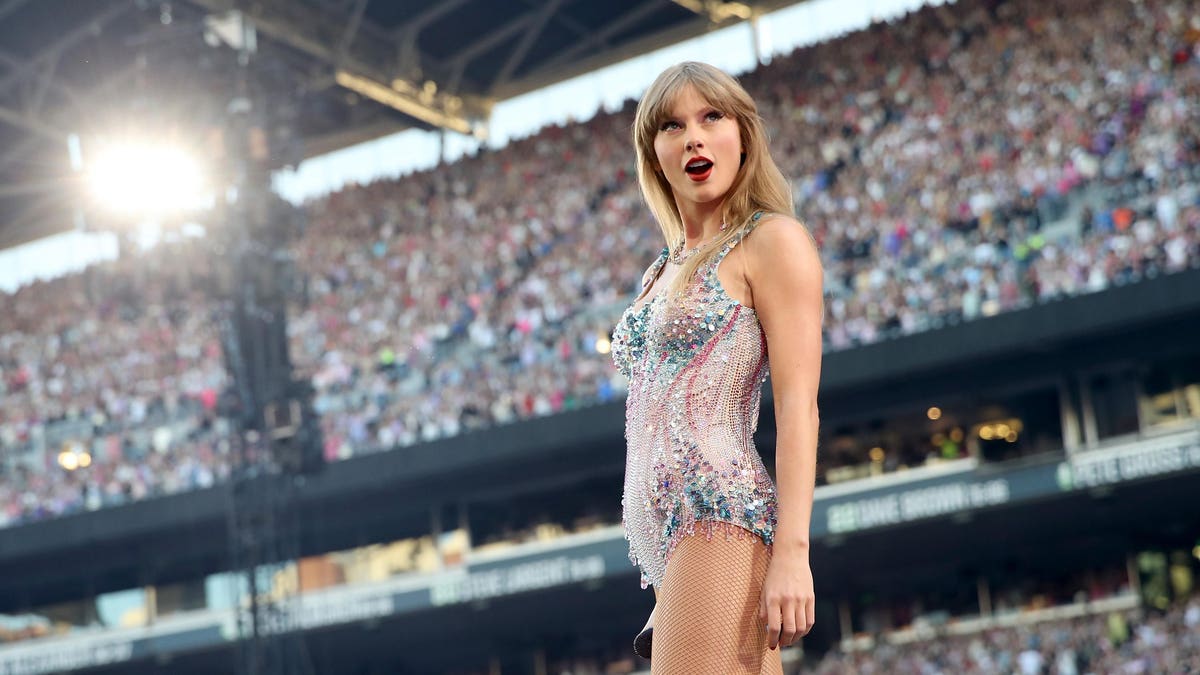
At the epicenter of the music universe, Taylor Swift is not-so-invisibly stringing together a record-breaking world tour with (currently) 146 stadium dates going well into 2024. Beyond her loyal following, surging record sales, and mounting accolades that leave her standing as the first and only woman solo artist to win the Grammy for Album Of The Year thrice – Taylor Swift has sustained a level of physical and intellectual stamina through rhapsodic storytelling in a career that has embodied over half her life – and can only be recapitulated by subdividing each of her personal and professional metamorphoses into highly relatable Eras. The philanthropy and social activism is relegated to a footnote in her long line of accomplishments. The honorary doctorate from NYU demonstrating global recognition of her veritable mastery is overlooked.
Although Dr. Swift is the first to admit that she is not the kind of doctor anyone wants in a medical emergency, she demonstrates a consistent pattern of choosing to wage uphill battle after uphill battle in her own industry by doubling down on what matters the most: the relationship between the musician and its listener. From pulling out of Spotify and Apple Music when music streaming was ill-defined and unfavorable for artists to publicly supporting the litigation against Ticketmaster because the experience took advantage of her fans, her approach of advocating for expert-led ownership and control continues to upend the music industry – and beseeches transcendence into healthcare.
In medicine, private equity offers physicians the opportunity to increase income while reducing insurance hassles – at the expense of relinquishing practice control. There exists early concerning evidence that private-equity-acquired medical practices charge 20% more per insurance claim than independent physicians. Once these short-term, for profit entities are able to demonstrate fiscal appreciation, they often repackage the physician practice to a larger private equity firm with a new set of rules and regulations that may or may not be aligned with prioritizing patient care.
While the full impact of private equity in healthcare remains to be seen, the very impetus for Taylor Swift presently re-recording her first six master albums stems from the sale of her works to private-equity group Ithaca Holdings and an owner with whom relations were already treacherous. Her masters were then again repackaged and sold to Shamrock Holdings for a reported level of $300 million in 2019. Throughout the highly public laundering and re-laundering of her intimate life work, it was immediately clear that the predatory contracts from music labels would grant no exception for basic artist agency – even for talents of Swift’s stature.
“Artists should own their own work for so many reasons,” she wrote in a March 2021 Instagram post. “But the most screamingly obvious one is that the artist is the only one who really knows that body of work.” Her exceptionalism, however, did afford her the most successful re-recordings and re-releases in music industry history. Nine years after personally penning an essay in the Wall Street Journal insisting on musicians to “realize their worth and ask for it,” she proved to be an architect, drawing up the plans to regain control of her art. First, she made what is otherwise private negotiations extremely public, leveraging social media to speak directly to her fans with unprecedented candor about her once-invisible handcuffs. Then, she switched labels to Republic Records and Universal Music Group that allowed her control and equity in future works, as is standard for established stars. Then, she recognized the business opportunity in novel technologies like streaming platforms who had everything to gain from her re-releases. Finally, she gave listeners a premium service in the form of previously un-released songs from “the vault” that only a true artist dedicated to their craft would have readily available.
The haters – and those who stand to lose – continue to dismiss her self agency efforts as “ploys” and “tactics,” as Swift continues to shake it off. Worse, they try to breathe life into a greed-centered narrative that is similarly applied to physicians to devalue their work – and distance them from the financial realities of the business they blindly operate. In medicine, this is taken to the extreme when “physician ownership” is intertwined with concerns of kickbacks and conflicts of interest instead of patient advocacy and physician alignment. If the business model is intentionally centered on the optimal experience between musician and listener – or doctor and patient – instead of profiteering, the rest falls into place.
Applying Swift’s blueprint to healthcare starts with frankly and directly acknowledging to patients the loss of autonomy and how this habitually hamstrings doctors and their relationships with patients. Next, organizational alignment with like minded individuals who defer to expertise and can work together to disrupt barriers, from arbitrary health insurance policies to exorbitantly unregulated pharmaceutical expenses, is critical. Third, adopting meaningful technologies like artificial intelligence-based processes to ensure algorithms automate burdensome administrative tasks instead of necessarily human tasks for patient-facing activities. Finally, a premium service in a physician-run ecosystem means striving for true shared decision making with total logistical and financial understanding of the options before a service is rendered. Healthcare transparency remains our wildest dream, and if the the person actually offering the services understands the toll, this makes for a more informed patient and just ecosystem.
“Music is art, and art is important and rare. Important, rare things are valuable. Valuable things should be paid for.. I hope they [artists] don’t underestimate themselves or undervalue their art,” Swift said. Medicine is as much of art as it is a science. Rendering medical care is arguably one of the most intimate and vulnerable relationships that exist, from a patient confiding to you a concern in the office or surrendering their body to you under anesthesia. If Taylor Swift can be the force that causes the castle of the music industry to crumble by doubling down on the artist-fan relationship, certainly physicians can take a page from her playbook to safeguard the patient-physician relationship.
As we’ve learned from Taylor Swift, equity and control for a physician – like an artist – starts with knowing our worth. The patient-physician relationship requires access, transparency, and a Swift-like sense of ownership of the healthcare delivery process led by people who intimately understand the work. The decades we poured into our own Eras that allowed us to achieve mastery in our craft as physicians were never guided by the money. But if we fail to regain the reigns of our business, patients and physicians alike will be left vulnerable to continued exploitation – a story we know all too well.
Read the full article here