




Startup DreamersStartup Dreamers
  • Home
  • Startup
  • Money & Finance
  • Starting a Business
    • Branding
    • Business Ideas
    • Business Models
    • Business Plans
    • Fundraising
  • Growing a Business
  • More
    • Innovation
    • Leadership
Trending

Google Shakes Up Its Browser Agent Team Amid OpenClaw Craze

March 28, 2026

Why Walmart and OpenAI Are Shaking Up Their Agentic Shopping Deal

March 27, 2026

At Palantir’s Developer Conference, AI Is Built to Win Wars

March 26, 2026
Facebook Twitter Instagram
  • Newsletter
  • Submit Articles
  • Privacy
  • Advertise
  • Contact
Facebook Twitter Instagram
Startup DreamersStartup Dreamers
  • Home
  • Startup
  • Money & Finance
  • Starting a Business
    • Branding
    • Business Ideas
    • Business Models
    • Business Plans
    • Fundraising
  • Growing a Business
  • More
    • Innovation
    • Leadership
Subscribe for Alerts
Startup DreamersStartup Dreamers
Home » ‘Twinkle, Twinkle, Little Star’ Describes Complex Physics, Says Study
Innovation

‘Twinkle, Twinkle, Little Star’ Describes Complex Physics, Says Study

adminBy adminJuly 28, 20231 ViewsNo Comments2 Mins Read
Facebook Twitter Pinterest LinkedIn Tumblr Email

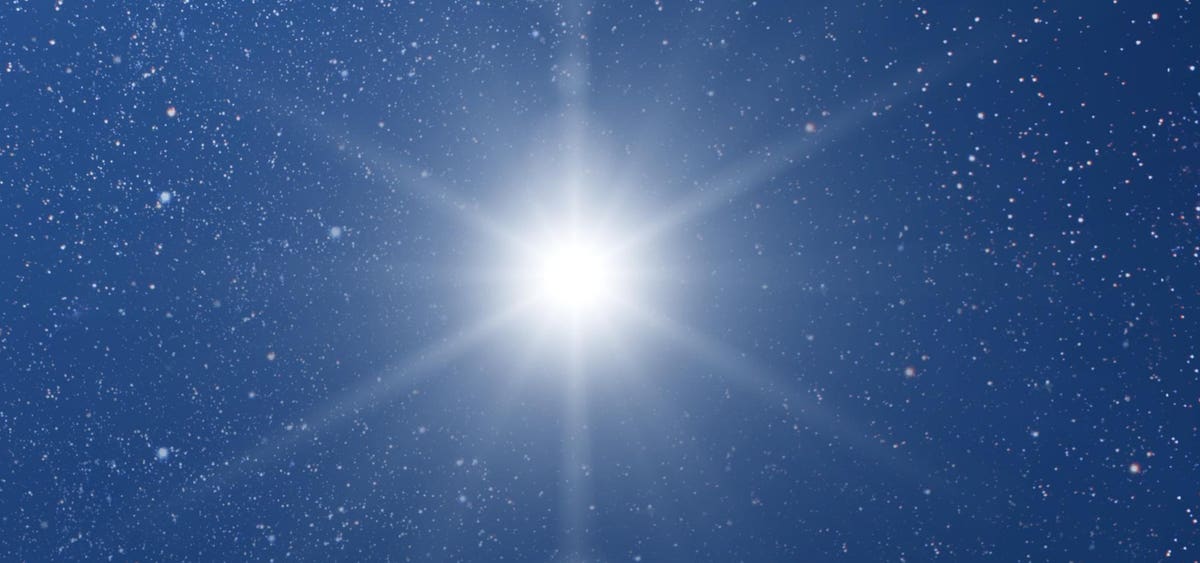
New research has revealed that the children’s song “Twinkle, Twinkle, Little Star” contains some cutting-edge astrophysics.

We see stars twinkle in the night sky because winds in Earth’s atmosphere bends and distorts starlight. However, new research published today in Nature Astronomy reveals that stars have a twinkle all of their own that’s caused by the rippling waves of gas on their surfaces.

“Motions in the cores of stars launch waves like those on the ocean,” said lead author Evan Anders, a postdoctoral researcher at Northwestern University. “When the waves arrive at the star’s surface, they make it twinkle in a way that astronomers may be able to observe.”

Second Twinkle

This second twinkle is caused by the waves rippling to the surface where they compress and decompress plasma, causing brightening and dimming of the star’s light. It’s thought that the waves can take hundreds of thousands of years to reach the surface.

It’s not something that can currently be seen by ground-based telescopes. It was picked up by astrophysicists making computer simulations from observations of stars’ brightness.

“For the first time, we have developed computer models which allow us to determine how much a star should twinkle as a result of these waves,” said Anders.

Listen to a Star Twinkle

After mapping the gas waves to workout how much stars should twinkle because of this process, the researchers then converted the data to music—specifically “Jupiter” from Gustav Holst’s orchestral suite “The Planets” and, fittingly, “Twinkle, Twinkle, Little Star.”

It’s hoped that future space telescopes will be able to sense a star’s innate twinkling—a signature of its core—specifically the rapid spinning of a giant star around its axis. It will help astronomers learn more about the very inner regions of stars, which is important because it’s in the cores of stars where the elements we depend upon to live and breathe are forged.

Wishing you clear skies and wide eyes.

Read the full article here

Share. Facebook Twitter Pinterest LinkedIn Tumblr Email

Related Articles

From $50M Startup To AI Powerhouse: Jennifer Tejada’s PagerDuty Playbook

Innovation March 26, 2026

The Dilemma Of Profits V.S. Guardrails

Innovation March 1, 2026

As Davos & India Celebrated AI, Paris Sounded The Alarm On AI Safety

Innovation February 28, 2026

Backyard Baseball Is Getting A New Game And I’m Ready For It In July

Innovation February 27, 2026

Solving The Data Bottleneck For Physical AI

Innovation February 26, 2026

Today’s Wordle #1686 Hints And Answer For Friday, January 30

Innovation January 30, 2026
Add A Comment

Leave A Reply Cancel Reply

Editors Picks

Google Shakes Up Its Browser Agent Team Amid OpenClaw Craze

March 28, 2026

Why Walmart and OpenAI Are Shaking Up Their Agentic Shopping Deal

March 27, 2026

At Palantir’s Developer Conference, AI Is Built to Win Wars

March 26, 2026

From $50M Startup To AI Powerhouse: Jennifer Tejada’s PagerDuty Playbook

March 26, 2026

The War on Iran Puts Global Chip Supplies and AI Expansion at Risk

March 24, 2026

Latest Posts

Meta Ramps Up Efforts to Disrupt Industrialized Scamming

March 22, 2026

Yann LeCun Raises $1 Billion to Build AI That Understands the Physical World

March 21, 2026

Iran Warns US Tech Firms Could Become Targets as War Expands

March 20, 2026

‘Uncanny Valley’: Anthropic’s DOD Lawsuit, War Memes, and AI Coming for VC Jobs

March 19, 2026

Google Is Not Ruling Out Ads in Gemini

March 18, 2026
Advertisement
Demo

Startup Dreamers is your one-stop website for the latest news and updates about how to start a business, follow us now to get the news that matters to you.

Facebook Twitter Instagram Pinterest YouTube
Sections
  • Growing a Business
  • Innovation
  • Leadership
  • Money & Finance
  • Starting a Business
Trending Topics
  • Branding
  • Business Ideas
  • Business Models
  • Business Plans
  • Fundraising

Subscribe to Updates

Get the latest business and startup news and updates directly to your inbox.

© 2026 Startup Dreamers. All Rights Reserved.
  • Privacy Policy
  • Terms of use
  • Press Release
  • Advertise
  • Contact

Type above and press Enter to search. Press Esc to cancel.

GET $5000 NO CREDIT