





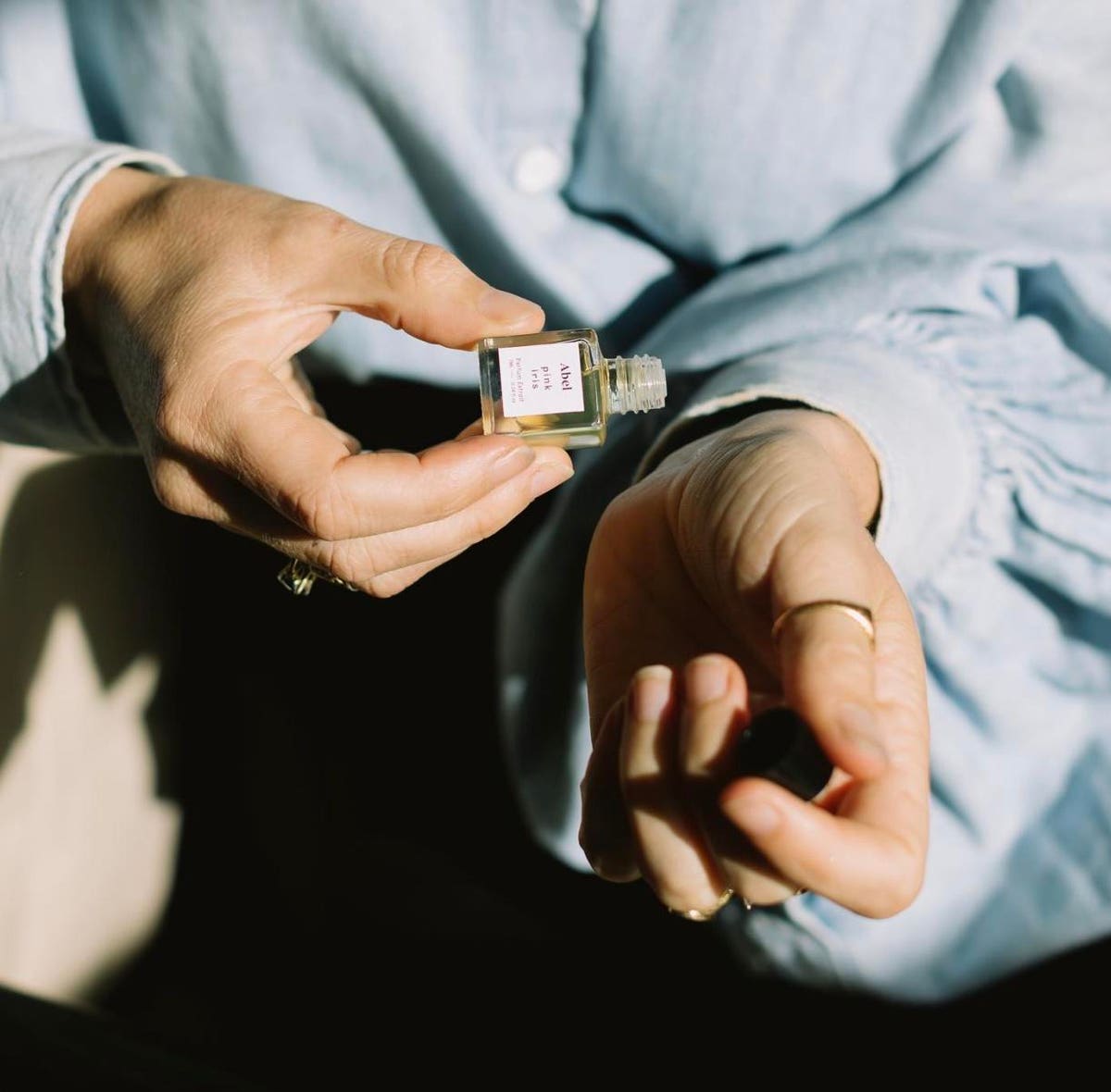
When Frances Shoemack started fragrance brand Abel, over a decade ago, she was convinced that the world didn’t need more “stuff,” she says. “We don’t need another brand selling you stuff. There’s too much of that already.”
So she decided to start a perfume company that did things a little differently: using only plant-based ingredients, incorporating bioplastic packaging, having a limited lineup of scents, sourcing as organically as possible, and self-funding it for as long as possible. It wasn’t another “thing:” it was a better approach to an everyday essential, she says.
Although a New Zealander, Shoemack was living in Amsterdam at the time with her husband and family. When they visited an art exhibit in Antwerp, she was captivated by the vintage perfume bottles. That was in 2011. And the spark behind Abel was born.
For the past decade, Shoemack has been slowly building the company, focused first on materials, ingredients, and transparency. By bootstrapping the business for years, she was able to craft a product, that she says, was very in line with her values. It began with one scent that found a home in boutiques across Europe quickly. That gave her confidence to develop a full range. So she and her husband did something gutsy: they sold their home.
Using some of the profits from that sale, Shoemack developed seven fragrances with the help of master perfumer Isaac Sinclair. And they started selling globally. It was a big step, one that they were unsure of how it would fully pan out.
“Having those extra funds definitely helped us broaden our reach and truly build a brand,” she says.
In the world of “clean” fragrances, Shoemack was ahead of the curve. Even today, she says the number of truly clean fragrances is marginal (less than 2%). And the term “clean” itself is a bit problematic because companies can just list “fragrance” as a single ingredient in cosmetics (even though that fragrance may be made up of several individual ingredients). Personal care products still have much less regulation than the food industry, for example; so brands can make claims with little vetting.
Shoemack herself says that she found the terminology confusing and problematic. The other term often used for brands like hers is “natural, which again has little meaning or regulation. Plus, its often that natural is the antithesis to modern-day science.
“So, we even thought of stopping calling ourselves natural or clean — seemed like such BS,” she says. “Instead, we’ll just educate people that natural can be science-led. Natural is not at heads with science-led.”
Shoemack took the transparency route, deciding to write the ingredients on her bottles from the beginning, and on the website. “It just made sense. If we are going to say something, we should be able to back it up. Fossil fuels and the byproducts of that industry make about 99% of the ingredients used in the perfume industry,” she notes. That, at its core, conflicted with her vision of the world.
At Abel, instead, every single ingredient, she explains, started its life as a plant and is readily biodegradable. Their fragrances are made entirely of essential oils, extracts and plant-derived scent molecules in a base of organically-certified, food-grade grain alcohol.
Abel tries to use organic and fair-trade ingredients wherever possible. But she notes that it’s just as important to them to source from supply chains that are not destructive. In some cases, they’re able to incorporate the waste products of certain industries. For instance, some of their cedar wood oil comes from Texas, as a byproduct of the paper industry, she explains.
So, why don’t other brands follow suit? Is it cost prohibitive?
“Yes, the scents do cost more. It’s like buying real truffles vs truffle-flavored foods, she says. “The former is definitely going to be more expensive. That said, for a long time, fragrances were seen as cash cow for luxury brands. If you couldn’t buy a handbag at a luxury brand, you might be able to buy a perfume. But what you were paying for is the brand, not the ingredients in the perfume. With Abel, you’re paying for the ingredients, not brand.”
As a small brand, they have their limitations, she admits. “We’d like to make more changes in the supply chain, but it’s harder when you’re smaller. However, more people are interested today than they were a decade ago when I started in these issues.”
Today, there is also increasing awareness about how chemicals, commonly used in high street perfume brands can be irritating, and affect one’s health. The Environmental Working Group, for instance, has documented that the average American uses between 10 to 15 personal care products daily, which have more than 120 ingredients collectively. Fragrance is often one of those; and thus, American are exposed to a litany of chemicals that could be impacting their endocrine system and overall health. While synthetic fragrances may have a more powerful the scent that can linger longer, the chemicals used can be harmful in the long-run.
Shoemack argues instead for a less-is-more approach: “a perfume shouldn’t overwhelm a room and a brand shouldn’t overwhelm the planet. We create with intention, not excess.”
Read the full article here