




While brands like Disney, Bud Light, Ben & Jerry’s, Target
TGT
Regardless of their political leanings, consumers still want companies to provide products and services that meet their needs. They also expect companies to be good corporate citizens and do right by their customers, employees, business partners, communities and the environment.
Companies that go beyond that by pushing divisive political or social agendas are in danger of alienating a large segment of consumers who don’t hold their progressive values.
Those consumers are looking for an alternative and the PublicSq. marketplace gives them that. PublicSq. is on the vanguard of the Freedom Economy, an emerging movement that gives consumers the choice to vote with their dollars for companies that share their values or, at the very least, don’t oppose them.
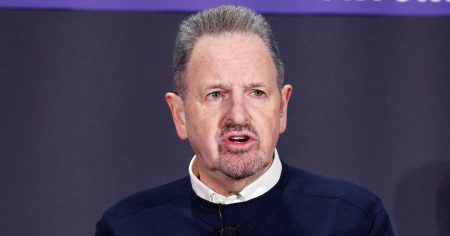
After only a year since its launch, PublicSq. Holdings went public in July on the New York Stock Exchange to chants of “USA” when founder, chairman and CEO Michael Seifert rang the opening bell.
“We’re going after Amazon
AMZN
Introducing The Freedom Economy
“The Freedom Economy is made up of a very large cohort of business and consumers that have felt largely unaddressed, ignored or sometimes downright antagonized in the era of hyper-progressive multinational corporatism,” Seifert shared with me.
“The Freedom Economy is largely known for what it celebrates, like patriotism, excellence, meritocracy, a love for the country, the Constitution and the values protected by the Constitution.”
Regrettably, those words of support for the country and its core values might sound controversial now, whereas they wouldn’t just a few years ago. Budweiser CEO Brendan Whitworth acknowledged as much in his April 14 quasi-apology Message to America– “We are in the business of bringing people together over a beer,” because it’s in American homes, backyards, pubs and ballparks where most Bud Light is consumed.
Likewise, Target is an American-based company with all stores and most of its business stateside, so waving the red-white-blue flag shouldn’t be anathema to it either, especially after comparable sales declined 5.4% in the second quarter, a rate faster than expected. As a result, Target adjusted year-end guidance down to a mid-single-digit decline.
Target suffered a self-inflicted blow in the quarter with its controversial Pride Month displays. It sparked outrage among some who felt the company had gone too far and criticism from others that the company was abandoning support for the LGBQ+ community when displays were moved to less visible spots in some stores.
Through the process, the company learned that customers want to shop in a “happy place for all our guests.” In closing the earnings call, Cornell committed the company to being an “escape” and “refuge” where customers “can recharge and enjoy those shopping experiences.”
In other words, shoppers want a respite from the divisive rhetoric and messaging so pervasive in the current culture. PublicSq.and its businesses partners offer that.
PublicSq. Offers An Alternative
Today PublicSq. is a directory marketplace for consumers to access its 65,000 and counting businesses that share traditional American values. But in time for holiday gift shopping, PublicSq. will evolve to a full e-commerce website where customers can search and buy from one or many of its vendors in a single shopping cart.
This innovation will turn on juice for PublicSq., making it a real competitor to Amazon and others. It’s identified a roughly 100 million total addressable market. To date, it’s reached only about 1.4% of its TAM. Already and without e-commerce, its six-month revenues through June 30 topped $900,000. “We’re just getting started,” Siefert said.
It’s poised to become an alternative to Amazon’s third-party marketplace for small businesses, which Statista reports accounts for nearly 60% of Amazon unit sales. With Amazon taking a growing share of third-party sellers’ sales, PublicSq. provides an attractive alternative. And it does Amazon one better by listing service businesses so consumers can find local providers that share their values.
Most of PublicSq. partners are small businesses that the Small Business Administration declares are the “lifeblood of the U.S. economy.” Small businesses are defined as those with 500 or fewer employees. They account for 44% of U.S. economic activity and create two-thirds of net new jobs.
And an overwhelming majority of Americans (80%) view small businesses as a positive force in society versus only 20% for large corporations, according to a Pew Research Center survey among 5,100 adults.
Voting Values In The Marketplace
Seifert explained that PublicSq. is non-partisan and doesn’t endorse political parties or candidates. Rather than being political, the five core principles to which its business partners agree are what one would call traditional American Judeo-Christian values:
- Commitment to freedom and truth
- Protect the family unit and celebrate the sanctity of life
- Believe small businesses and the communities who support them are the backbone of the economy
- Believe in the greatness of the nation and fight to defend it
- The Constitution is non-negotiable – “Government isn’t the source of our rights, so it can’t take them away.”
With its values-based approach, PublicSq. can identify new business opportunities that its customers demand, like baby diapers. So it launched a wholly-owned baby-care brand, called EveryLife, its “Amazon Essentials” play.
“Our customers kept telling us they want a pro-family baby products and diaper company because all the other big ones have taken progressive political stances,” he said.
After less than a month of launch in July, EveryLife generated over 4,300 orders and some $300,000 in revenues. And with 60% of orders on a monthly auto-renew subscription, it can look forward to ongoing sales.
The company also donates a portion of EveryLife proceeds to adoption facilities and pregnancy centers. Most recently, it sent a shipment of diapers and wipes to Maui to help survivors of the tragic wildfires.
“We want to help salvage the American economy, and actually restore it to a position of strength for the coming generations. We need an economy that goes back to the basics where people can spend money and support businesses that respect their values,” he concluded.
See also:
Read the full article here