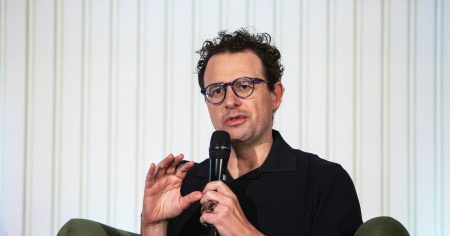






President, Inizio Engage XD & CMO, Inizio Engage | Chair Creative Mentor Network | Marketing Academy Mentor | FRSA | MGGB.
The world of work arguably faces more “known unknowns” and “unknown unknowns” (concepts popularized by Donald Rumsfeld) than ever before. Inflation, geopolitical conflict, anthropogenic climate change, the reverberations of the global pandemic and the speedy infusion of AI-based tools into the work ecosystem combine to provide a new “age of discontinuity.”
Additionally, multi-generational workforces become more evident as younger cohorts join one, two or three generations of older counterparts. Flexible working, immersive technology, workplace wellbeing, DEI and sustainability sit alongside other business-critical constants like compliance, safety and risk on the “overstretched CEO” priority list.
The Contemporary Learning Challenge
The implications of all the business challenges above for corporate learning are perhaps more significant than many other areas of business. Organizational resilience in a changing world is powered by organizations’ ability to adapt and change, which in turn is powered by people: culture, skills and capability.
As the president of a company that offers digital learning services, I’ve had many conversations with CEOs and global business leaders. Many of them have cited the need to upskill respective contemporary workforces as critical in a time when automation, AI and new job models are reconfiguring business.
However, inherent tensions in employer and employee perspectives are evident. The World Economic Forum (WEF) revealed that employers estimate that 44% of workers’ skills will be disrupted in the next five years, whilst according to PwC, only 43% of employees say they have a clear sense of how skills required for their jobs will change at all over the same span.
The WEF also reports that 85% of organizations identify “increased adoption of new and frontier technologies” and “broadening digital access” as the trends that are most likely to drive transformation in their organizations. The PwC research revealed that only 36% of employees “strongly” or “moderately” agreed that the skills they need to succeed in their jobs will change significantly over the next five years.
5 Ways To Re-Think Corporate Learning And Capability Development
Given this context, organizations must re-think their learning approach to stay ahead of their competitors while retaining and attracting the best talent. I believe there are five key principles to how future-focused, resilient organizations can approach learning and capability.
1. A New Approach To Old Problems
Whilst technological literacy is among the top 10 necessary skills for workers highlighted in the WEF report, the focus on soft skills remains a major area of need, with “analytical thinking,” “creative thinking” and “leadership” making the list. The future is therefore about how we develop people in the skills, as well as what core skills remain relevant and essential, year after year.
This means that ensuring learning can be done in the flow of work, creating more learning moments wrapped around individual development and business challenges, and the elusive measurement of learning ROI become “must haves.”
2. Make AI Your Friend
AI can support learners in demonstrating their understanding of topics and tailoring relevant and evolving content. Enduring regimented and cumbersome learning experiences in categories such as ethics and compliance are unnecessary. Instead, employers should look for new ways to enable employees to rigorously and continuously illustrate knowledge mastery on an ongoing basis, rather than portray learning via set “policy regurgitation” exercises.
For example, employers can incorporate AI to evaluate whether employees have the right levels of understanding on an ongoing basis, without having to revisit full-scale training courses. This means they should aim to make learning more about “top up” nudges and accurately targeted at areas for development, rather than full-scale revisiting of curricula. This strategy can apply to all topics from sales training to business ethics.
3. Build User-Centric And Evidence-Based Programs
Data and analytics can play an increasing role in ensuring employers and line managers have a single-learner view and the ability to track improvements from training to output. Employers should create evidence-based, adaptive and blended learning programs and ensure individual learners can take on information in ways that are relevant to them, wherever they are on the multi-generational employee spectrum. Any corporate learning activities should account for each learner being a microcosm of capability and need.
4. Add The ‘Wow’
There is perhaps no area more ripe for creativity than workplace learning. Learning programs are even competing for learners’ attention with YouTube, TikTok or podcasts that can be highly engaging, creative and effective. There is no longer any excuse for turgid learner experiences. Music, comedy, improvisation, user-generated content (UGC), game-based activities and immersive technology are all tools employers can use to make their content memorable and their programs effective.
5. Apply The Science
It’s almost paradoxical that the learning market is one of the most conservative when it comes to applying science to influencing behavior. Understanding and predicting how end users will receive learning content, or shaping programs using behavioral science, can make them much more potent. Treating learning as a living experiment, using applied psychology, can pay dividends.
New Learnings For The Learning Market
The large corporate learning market is currently defined in large part by large business process outsourcers (BPOs) and smaller niche players that don’t always have the scale to invest in innovation. I expect that we will see significant transformation, and new entrants as a blend of creativity, innovation, science and scale becomes more potent.
These new entrants and the more innovative legacy players can share new approaches to help solve both old and new challenges, which could create one of the most exciting categories in business. And to paraphrase Mr. Rumsfeld, this transformation is no longer an “unknown unknown.”
Forbes Business Council is the foremost growth and networking organization for business owners and leaders. Do I qualify?
Read the full article here