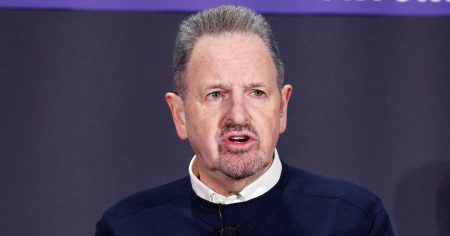




Sutskever became an AI superstar, coauthoring a breakthrough paper that showed how AI could learn to recognize images simply by being exposed to huge volumes of data. He ended up, happily, as a key scientist on the Google Brain team.
In mid-2015 Altman cold-emailed Sutskever to invite him to dinner with Musk, Brockman, and others at the swank Rosewood Hotel on Palo Alto’s Sand Hill Road. Only later did Sutskever figure out that he was the guest of honor. “It was kind of a general conversation about AI and AGI in the future,” he says. More specifically, they discussed “whether Google and DeepMind were so far ahead that it would be impossible to catch up to them, or whether it was still possible to, as Elon put it, create a lab which would be a counterbalance.” While no one at the dinner explicitly tried to recruit Sutskever, the conversation hooked him.
Sutskever wrote an email to Altman soon after, saying he was game to lead the project—but the message got stuck in his drafts folder. Altman circled back, and after months fending off Google’s counteroffers, Sutskever signed on. He would soon become the soul of the company and its driving force in research.
Sutskever joined Altman and Musk in recruiting people to the project, culminating in a Napa Valley retreat where several prospective OpenAI researchers fueled each other’s excitement. Of course, some targets would resist the lure. John Carmack, the legendary gaming coder behind Doom, Quake, and countless other titles, declined an Altman pitch.
OpenAI officially launched in December 2015. At the time, when I interviewed Musk and Altman, they presented the project to me as an effort to make AI safe and accessible by sharing it with the world. In other words, open source. OpenAI, they told me, was not going to apply for patents. Everyone could make use of their breakthroughs. Wouldn’t that be empowering some future Dr. Evil? I wondered. Musk said that was a good question. But Altman had an answer: Humans are generally good, and because OpenAI would provide powerful tools for that vast majority, the bad actors would be overwhelmed. He admitted that if Dr. Evil were to use the tools to build something that couldn’t be counteracted, “then we’re in a really bad place.” But both Musk and Altman believed that the safer course for AI would be in the hands of a research operation not polluted by the profit motive, a persistent temptation to ignore the needs of humans in the search for boffo quarterly results.
Altman cautioned me not to expect results soon. “This is going to look like a research lab for a long time,” he said.
There was another reason to tamp down expectations. Google and the others had been developing and applying AI for years. While OpenAI had a billion dollars committed (largely via Musk), an ace team of researchers and engineers, and a lofty mission, it had no clue about how to pursue its goals. Altman remembers a moment when the small team gathered in Brockman’s apartment—they didn’t have an office yet. “I was like, what should we do?”
I had breakfast in San Francisco with Brockman a little more than a year after OpenAI’s founding. For the CTO of a company with the word open in its name, he was pretty parsimonious with details. He did affirm that the nonprofit could afford to draw on its initial billion-dollar donation for a while. The salaries of the 25 people on its staff—who were being paid at far less than market value—ate up the bulk of OpenAI’s expenses. “The goal for us, the thing that we’re really pushing on,” he said, “is to have the systems that can do things that humans were just not capable of doing before.” But for the time being, what that looked like was a bunch of researchers publishing papers. After the interview, I walked him to the company’s newish office in the Mission District, but he allowed me to go no further than the vestibule. He did duck into a closet to get me a T-shirt.
Had I gone in and asked around, I might have learned exactly how much OpenAI was floundering. Brockman now admits that “nothing was working.” Its researchers were tossing algorithmic spaghetti toward the ceiling to see what stuck. They delved into systems that solved video games and spent considerable effort on robotics. “We knew what we wanted to do,” says Altman. “We knew why we wanted to do it. But we had no idea how.”
Read the full article here