




Jess Shanahan is a journalist and the founder of Jet Social where she works with e-mobility brands on expert thought leadership content.
In countries with aging electricity grids, like the United Kingdom and Germany, there’s a lot of discussion about whether electric vehicles will cause disruption. While there’s some truth in those concerns, as a writer working with brands in this space, I find that the impact of the mass adoption of electric cars is often discussed, but a lot of people overlook how bi-directional charging and other technology could play a role. I believe there’s an opportunity for EVs to solve some of the problems caused by modern energy consumption.
Understanding Grid Instability
If 80% of all passenger cars became electric, there would only be an increase in electricity consumption of 10%-15%, according to Eurelectric. Because EV uptake of this scale will be gradual, this gives utilities time to plan and allows for grid upgrades in the interim. So, it’s likely the grid will be able to cope with the overall demand, but where things get tricky, especially in the U.K., is when it comes to peak demand.
In the EU, 58% of electricity generation is already carbon neutral, and that’s going in the right direction. What we want to avoid is extra demand on the grid, which means we need to fire up coal power stations to charge our EVs when everyone gets home from work and plugs their car in. Similar things are already happening in the U.K. During the recent heat wave in June, the National Grid broke a 46-day run of energy generation without using coal. When everyone turned their air conditioning on, it was coal to the rescue to make up for the shortfall in renewable energy.
The United States is also affected by grid instability, with rolling blackouts affecting some states during winter storms in December 2022 (not long after heat waves had previously impacted the grid in September). In some parts of the country, as much as 63% of the outages came from natural gas plants, according to the PJM Interconnection, which operates the largest regional power grid in the U.S. When equipment froze in the severe temperatures, customers were left without power, and even when the lights were on, they were advised to avoid washing clothes or running the dishwasher, all in the run-up to Christmas.
It might seem like EVs will only add to the problem, but I don’t believe that’s the case. In fact, the energy they’re able to store could be the answer to issues such as those faced by the U.S. at the end of last year.
Vehicle-To-Everything As A Solution
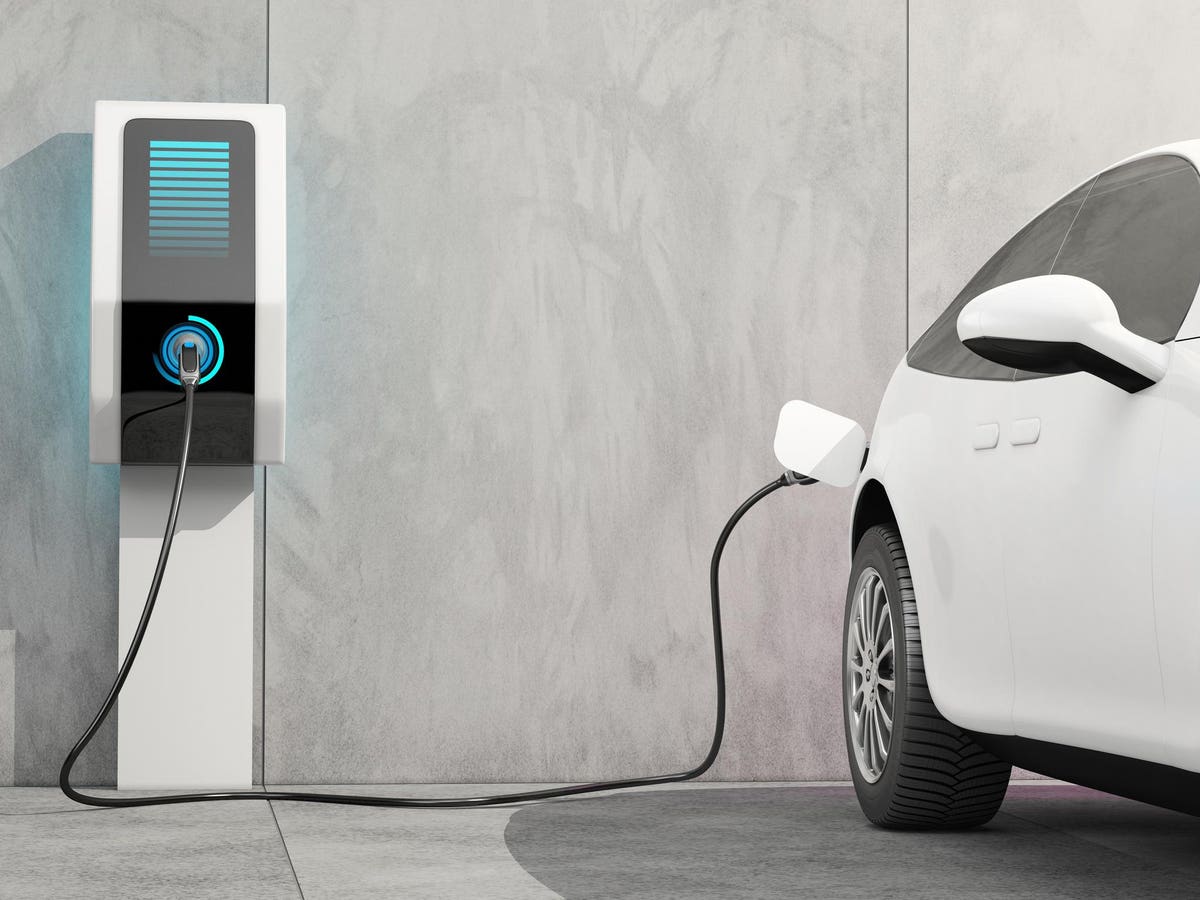
Vehicle-to-everything (V2X) and, specifically, vehicle-to-grid (V2G) technology allows for bi-directional charging. This means that while an EV can draw power from the grid to charge, it can also discharge back to the grid or building it’s connected to. So, at times of peak demand, EV owners can let the grid take energy from their vehicles in order to make up the shortfall from other generation methods.
This becomes even more important when homeowners are experiencing a threat of blackouts. Not only could V2X help give enough back to the grid to avoid those blackouts, but the energy stored in a vehicle’s battery could, potentially, power a home for days. Take the Ford F-150 Lightning, for example. It’s been used in trials by the Pacific Gas and Electric Company to determine how it can provide backup power to homes.
The extended-range F-150 Lightning has a 131-kWh battery, so when you consider the average U.S. home uses 30 kWh of energy per day, a fully charged F-150 Lightning could power an entire home for more than four days.
According to the Natural Resources Defense Council, California’s recently implemented Clean Car Standards are set to usher in approximately 14 million zero-emission vehicles by the year 2035. Should these all be battery-electric vehicles with the ability to feed power back to the grid, their collective battery capacity could, in theory, power all of California’s households for a full three days.
And there’s the potential for cost savings. In a recent study, Imperial College London ran simulations of Britain’s 2030 power system, based on real data from more than 25,000 U.K. charging points. It found that each V2G charger in the simulation could reduce annual grid-operating costs by £6,700 and save more than 37 tonnes of CO2 emissions.
While there are already vehicles and chargers out there that support bi-directional charging, we’re still two or three years away from this technology becoming mainstream. And while EV batteries are designed for mobile use, their ability to withstand the frequent charging and discharging cycles required by V2G is still up for debate. There are also concerns about how using EVs as a power source could affect their longevity and performance. Currently, numerous studies are underway to address these challenges, aiming to refine and perfect the technology for wider-scale use.
What This Means For Businesses
For any business operating in areas where rolling blackouts could affect uptime, workplace chargers could present an opportunity. With the right company vehicles and bi-directional chargers, it’s possible to power a building without the use of a generator.
There could also be an opportunity here for those already involved in the business of charging to deliver smart charging and V2G software that could open up these capabilities to more people once the hardware becomes more affordable.
Equally, for fleet operators, V2G could provide a level of flexibility when it comes to charging. A vehicle could be charged overnight on cheaper electricity and then discharged to a different vehicle that’s more in need of the extra range the next day. This could help save on fleet costs while better managing the energy needs of the location.
In short, it’s likely that EVs won’t cause as many energy demand problems as they could potentially solve. In fact, it’s likely they’ll be able to minimize the strain on the grid and reduce our reliance on fossil fuels.
Forbes Business Council is the foremost growth and networking organization for business owners and leaders. Do I qualify?
Read the full article here