





The bright lights of big cities could be causing an evolutionary adaptation for smaller eyes in some birds, a new study indicates.
© Copyright by GrrlScientist | hosted by Forbes | LinkTr.ee
A recent study has revealed that two common species of urban resident songbirds have eyes that are approximately 5% smaller than those of the same species that live in less brightly lit areas nearby. Further, no difference in eye size was measured in two species of migratory birds, regardless of which part of the city they were breeding in.
“This study shows that residential birds may adapt over time to urban areas, but migratory birds are not adapting, probably because of where they spend the winter — they are less likely to have the same human-caused light and noise pressures,” observed wildlife biologist Jennifer Phillips, an Assistant Professor at the School of the Environment at Washington State University, in a press release.
Professor Phillips, who has always been fascinated with how nature persists despite increasing human encroachment, turned this fascination into a career focused on ornithology, animal behavior, community ecology, and conservation.
A few years ago, I shared a startling study with you that reported more than 3 billion birds had disappeared from North America’s skies since 1970 (more here). Originally, it was thought that habitat fragmentation was the main driver of this remarkable decline in wild bird numbers, but this latest study suggests that sensory pollutants like artificial nighttime lights may also play a role in wild birds’ ability to cope with urban life.
“It may make it more difficult for them to adjust to city life during the breeding season,” Professor Phillips elaborated.
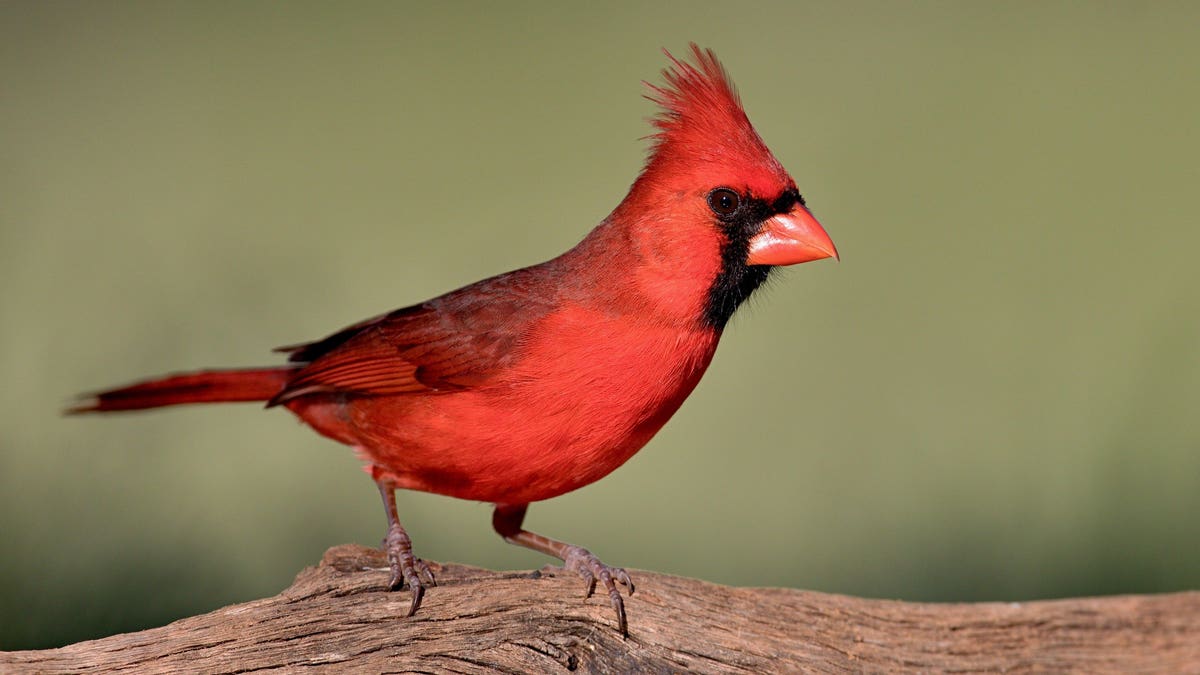
To do this study, Professor Phillips collaborated with postdoctoral fellow, ornithologist Todd Jones, who now is with Smithsonian’s Migratory Bird Center, and with graduate student Alfredo Llamas of Texas A&M University, San Antonio, to examine more than 500 birds from the central and edge areas of the city of San Antonio. They measured the morphological phenotypes of two residential species — Carolina Wrens, Thryothorus ludovicianus, and Northern Cardinals, Cardinalis cardinalis — and two migratory species — Painted Bunting, Passerina ciris, and White-eyed Vireo, Vireo griseus — that were breeding either in urban core or edge habitats in San Antonio, Texas.
For this study, they measured and compared body and eye sizes of the birds and analyzed noise and light measurements during the day and night in each area.
Professor Phillips, Dr Jones and collaborators found no differences in body size in the study birds breeding either in urban or edge areas of San Antonio — except in one species: the Painted Bunting. This is a migratory North American bird species that winters in Central America and breeds in the southeastern United States. A more detailed analysis of Painted Buntings’ natural history revealed this size difference was an age effect: younger, smaller male buntings were less able to compete successfully for mates or territory with their larger and more colorful elders, so they often ended up stuck in brighter, noisier — and less desirable — central locations.
This study is interesting because this is the first one to specifically examine the effects of human-created urban lighting on wild birds and to identify how it is connected to avian eye size in both migratory and sedentary urban species.
According to the study’s lead author, Dr Jones, smaller eye size may enable urban birds to deal with the brighter and more constant light in city environments compared to urban edges. Birds with bigger eyes can be somewhat blinded by the glare of city lights or may be unable to sleep well, which could put them at a disadvantage in urban areas.
“Humans may have some unintended consequences on birds that we don’t realize,” Dr Jones pointed out. “We don’t know if these adaptations could have good or bad consequences for the birds down the road, considering that urban environments aren’t going away anytime soon.”
Though the underlying mechanisms of this relationship remain unclear, being a year-round resident of light polluted areas appears key to this pattern.
“It is also important to understand how to manage such environments for the birds that maybe aren’t urban adapted.”
This study is part of a much larger body of research that investigates the effects of both light and noise pollution across multiple bird species. Professor Phillips and collaborators are working on a variety of controlled experiments to examine how light and noise affects urban birds’ stress levels, sleep hormones, song structure and aggression levels, how an altered environment alters physiology.
“We want to know whether patterns at molecular and behavioral scales affect fitness or not,” Professor Phillips explained. “Essentially, we’re trying to understand what are the benefits and costs to these animals living in a sensory polluted world.”
Source:
Todd M. Jones, Alfredo P. Llamas, and Jennifer N. Phillips (2023). Phenotypic signatures of urbanization? Resident, but not migratory, songbird eye size varies with urban-associated light pollution levels, Global Change Biology | doi:10.1111/gcb.16935
SHA-256: 9ab94921e06b203a216cb219d873f92ea4083642075e2e0be632939cd42949aa
Socials: Bluesky | CounterSocial | LinkedIn | Mastodon | MeWe | Post.News | Spoutible | SubStack | Tribel | Tumblr | Twitter
Read the full article here