




Apple’s CEO Tim Cook recently declared that they “never felt an urgency to be first, we’ve always felt an urgency to be best, and that is how we go into this [artificial intelligence] as well.” The company is reportedly planning to start implementing generative AI on the iPhone in late 2024. On the other hand, Samsung’s upcoming Galaxy phones could feature ChatGPT-like generative AI and will likely be out around early 2024.
Chinese phone makers, on the other hand, are adopting a different mindset. The likes of Xiaomi, Oppo, Vivo, and Huawei want to “squeeze” generative AI into their newest devices faster than Apple and Samsung because they see it as a chance to turn the tables on their rivals in the highly competitive smartphone market.
The dominant phone makers in China have already unveiled generative AI-supported products after spending years building their artificial intelligence capabilities. Plus, they are nimble and can move quickly. And their long-term strategy to move upmarket requires new catalysts to attract higher-end users, and generative AI could provide just the stimulus they need.
But will they succeed?
Users can access the latest and most powerful generative AI apps on their phones already. So how much of a difference will it make to have these tools built into the phone itself?
Pulling the Rabbit Out of the Hat
Chinese smartphone makers are focusing on three main areas to integrate generative AI into their devices: enhancing their AI assistants, adding multimodal functions, and enabling cross-device functionalities.
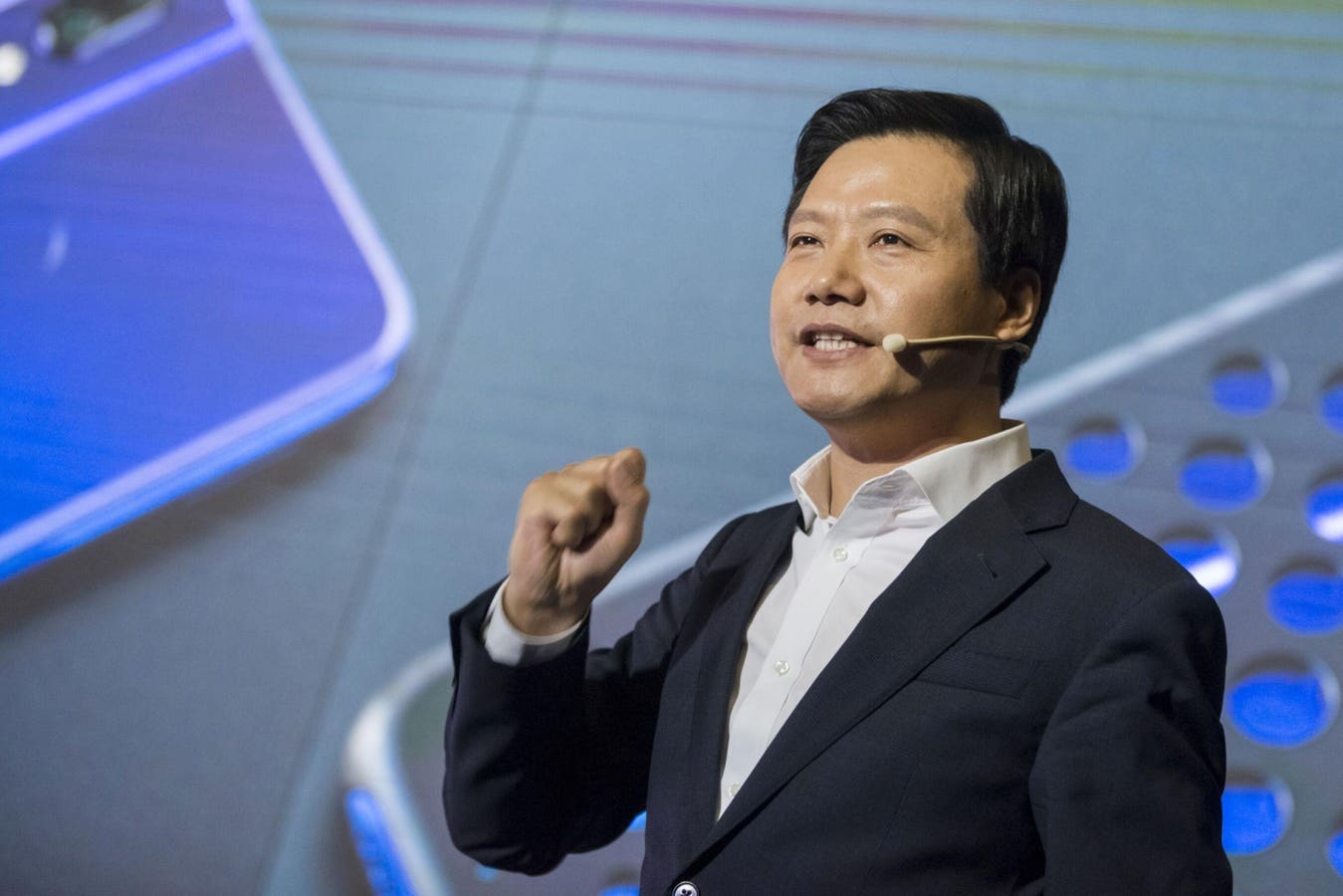
Xiaomi’s founder and CEO Lei Jun announced in August that his company’s digital assistant, which is called Xiao Ai, had begun upgrading to include generative AI capabilities. It’s said to be supported by a lightweight AI model with 1.3 billion parameters that runs locally on the phone, which Xiaomi says performs just as well as a model with 6 billion parameters running on its cloud computing service.
The list of things Xiao Ai can do include song and object recognition, harassment call prevention, transport route suggestions, and medication reminders. Integrated into Xiaomi’s smart home devices, Xiao Ai can also perform other tasks such as controling household appliances like rice cookers and air conditioners.
The phone’s capabilities extend from text and voice to vision, and it’s being expanded across the rest of Xiaomi’s lineup of smart devices. Lei Jun hopes the functions—many of which already exist—will become more intuitive and intelligent in the future with the help of generative AI.
The foundation to Xiao Ai’s “upgrade” lies in the company’s long-term investment in AI. Since 2016, Xiaomi has built a team focused on AI, which has now grown to include more than 3,000 people. With more than 110 million monthly active users, Xiao Ai could evolve rapidly to enhance its abilities.
Xiaomi’s domestic rivals have also been busy issuing a stream of similar announcements. For example, Huawei said in August that its AI assistant, Xiao Yi, would be supported by its Huawei Cloud Pan Gu models. The telecom giant said Xiao Yi would provide multimodal functions and be integrated across the company’s product suite from phones to laptops, and possibly even smart cars.
Meanwhile, Oppo has also said that it would soon launch an upgraded digital assistant called Xiaobu, which is being built on the company’s LLM AndesGPT. Developed by Oppo’s Andes Intelligent Cloud team, the LLMs will have 100 million, 300 million, and 1 billion parameters that can be used to support various use cases. Vivo also announced that it would release its self-developed Blue LM that would support its Xiao V assistant in November.
Game-Changer or Hype?
Global smartphone shipments declined 12% to around 525 million units during the first half of 2023, according to market researcher Canalys. Smartphone shipments in China accounted for 124 million of those units during the same period, a drop of 7% year-on-year. Moreover, Xiaomi, Oppo, and Vivo—the three biggest Chinese phone makers—have lost 1-2% of global market share since 2021.
Declining sales are pushing Chinese phone makers to search for new sales engines, and generative AI appears to be the perfect catalyst that can reignite user enthusiasm.
But will it be a real game-changer?
One of the biggest challenges is how to “squeeze” generative AI into the already cramped handsets.
Smartphones already face constraints in terms of size, performance and battery life, which means deploying generative AI onto the handsets themselves could significantly impact the response times and overall performance. For example, it could take two seconds to recommend the next word when users try to type something, and running the LLMs on devices could drain batteries quickly.
Running the LLMs on the cloud would pose a different set of tradeoffs. It won’t be able to personalize the AI assistant as well, and ensuring privacy and security becomes more challenging. The cost of running these models on the cloud is also exorbitantly high.
The Chinese phone makers are choosing to use both deployments to support different use cases, with “light” models deployed on devices handling less compute-intensive user needs that require more customization, such as email writing and calendar optimization. The more compute-intensive needs like vision and audio will be handled by larger models stored on the cloud.
Such constraints could be relieved as smartphone chip manufacturers race to provide better solutions. MediaTek aims to build up its edge computing products to accelerate AI applications on phones and other devices. Qualcomm is also strengthening its edge computing solutions.
The true test, however, is if these generative AI tools can really revolutionize the experiences of its users. Will getting more intelligent driving directions or having better email writing recommendations be enough for consumers to pay for a new phone?
The most likely outcome is that the race to make smartphones really “smart” will level the playing field rather than set phone makers apart. As all phones become increasingly intelligent, manufacturers will need to find new ways to attract consumers.
Read the full article here