




You hear it up and down the U.K.: the future of nuclear energy will be small and flexible. Of course, people have been claiming for years now that small modular reactors (SMRs) are just about ready. As with so many technological breakthroughs, the reality has lagged behind the optimism.
Scale is not just a matter of technical preference, as the heated debates over the Sizewell C proposal indicate.
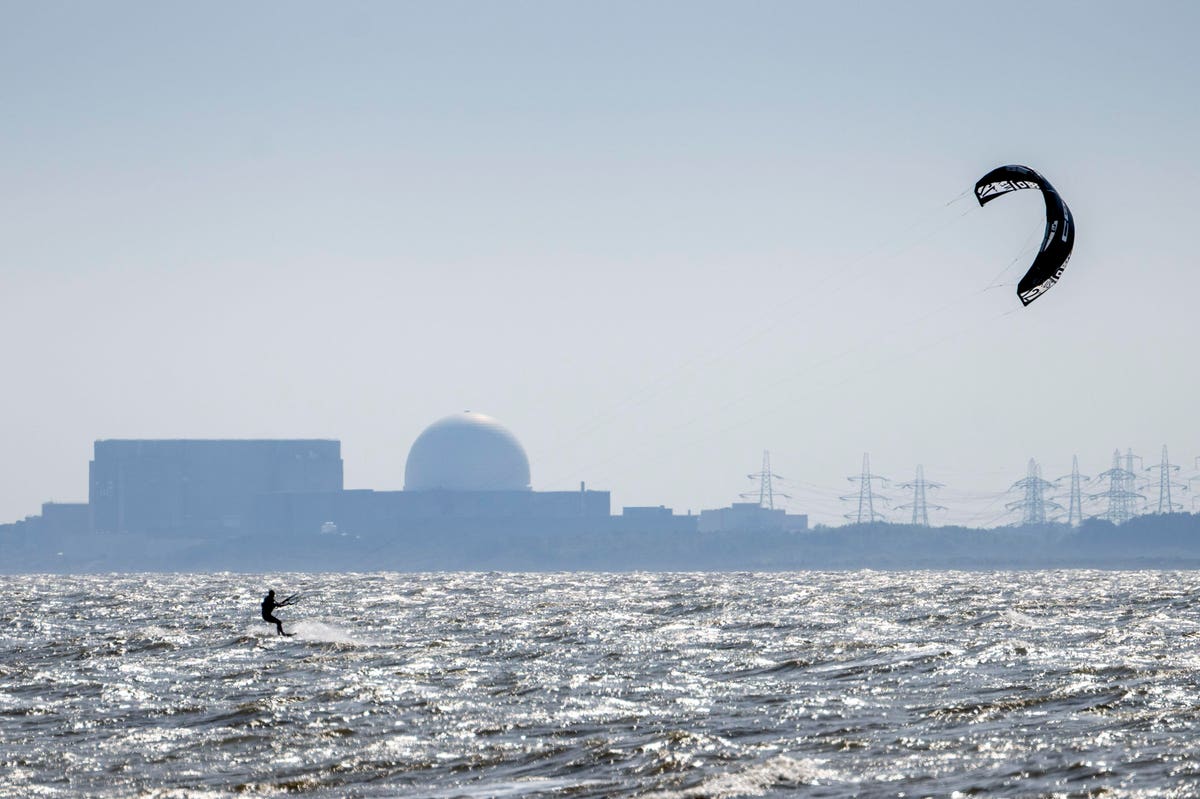
Alison Downes is a campaigner with Stop Sizewell C, an organization attempting to put the brakes on a nuclear mega-project on the eastern coast of England. Like the also-contested Hinkley Point C nuclear plant, Sizewell C would be a two-reactor, 3.2-gigawatt power station. It would be located near the smaller Sizewell B plant currently in operation. According to the operator, EDF, Sizewell C would produce enough electricity for around 6 million homes. EDF expects it to be operational in 2034, but construction has already lagged behind expectations.
Stop Sizewell C has a number of reasons for opposing the proposed Sizewell C plant. First, the project is expensive. The estimated price tag is £20 to 30 billion, and the projected expenses have continued to tick up.
Then there are the ecological concerns. The plant would be sited in a picturesque conservation area next to a bird reserve. Some are worried about coastal erosion. There are also uncertainties about the exact source of the water that will be critical to the plant’s operations, which has led to legal challenges.
Compared to large-scale nuclear in an ecologically delicate area, Downes argues that “there are alternative ways of making progress on our climate objectives”. She’s in favour of cheaper, quicker investments in renewable energy.
One alternative might just be smaller-scale nuclear reactors, though these too are likely to be costlier ways to produce energy than renewables. And there remain debates about whether it will be possible for countries like the U.K. to go fully renewable, given the weather dependency of wind and solar energy. (However, nuclear plants are also subject to downtime; in 2022, half of France’s nuclear fleet was offline.)
One advantage of SMRs is public opinion: Downes says that SMRs would elicit less opposition in Suffolk than the behemoth Sizewell C plant, for instance. The consequences for the coastline environment would be lesser, as would the costs. SMRs would also be more portable and agile, with efficiency gained from being able to start and stop them more easily than giant, immovable power stations.
Yet Downes also believes that the massive Sizewell C project is politically popular partly because of its size. “Any big infrastructure project creates jobs,” as she points out.
The U.K. government is supporting nuclear in both big and small forms. At the launch of the Net Zero Nuclear initiative on September 7, Andrew Bowie, the U.K.’s minister for nuclear and networks, said, “We have launched a nuclear power revival in the UK, with projects like Hinkley and Sizewell C, but also with Great British Nuclear supporting the latest cutting-edge technologies like small modular reactors.”
Great British Nuclear is not an energy-focused reality show, but a young government unit that has kicked off its work with a technical selection process for SMRs. The hope is that these will be operational in the mid-2030s. In other words, the earliest SMRs could come online around the same time as Sizewell C, which complicates discussions of which would be developed faster.
Once they become viable, SMRs would be cheaper and faster to build, while using less fuel and generating less waste (although this is contested). Nuclear waste remains a prime concern for nuclear skeptics like Downes, given the almost inconceivably long timescales and uncertainty about what to actually do with the stuff.
Of course, the trade-off is that SMRs would generate less electricity – about 1/3 of the capacity of conventional big nuclear reactors. The sheer amount of energy supply is of course important. Yet conversations about the scale of nuclear energy production have tended to lack parallel discussion of energy consumption, and how to encourage energy conservation.
According to Hannah Ritchie, author of the Sustainability by Numbers newsletter, large-scale nuclear reactors typically take six to eight years to build – though there can be huge variations, with some overruns lasting decades. It’s the political and economic situation, more than the technical aspects like the reactor design, that tends to shape these timescales.
One reason that scale matters, as Ritchie notes, is a general one: “big projects are riskier than smaller ones, and they give us far fewer opportunities to learn how to build them better”.
This is among the reasons that, Ritchie believes, “If nuclear fission technology is to have a renaissance, it’s going to be modular…The bad press and longer construction times of recent reactors in [certain] countries make a comeback even less likely.”
For the time being, the U.K. is hedging its bets by investing in both big (controversial) and small (nonexistent) nuclear reactors. Other countries are looking to this corner of Europe for clues as to whether they too should be scaling up or down their nuclear prospects.
It’s not an either/or situation, of course, as the U.K.’s diversified nuclear options suggest. But there are limits to both budgets and political room for maneuver, as well as limited time to get the energy mix right as the climate transforms for the worse.
Read the full article here