





All sharks and rays reproduce internally, which means males and females must “do the deed” in order to make shark pups a reality. The shark mating we’ve seen is not vanilla in a sense; in fact, this intimate process often leaves its mark in the form of bite wounds for the female shark. Now, scientists are using them as a natural timestamp, gauging when mating occurred without ever having to witness the act itself.
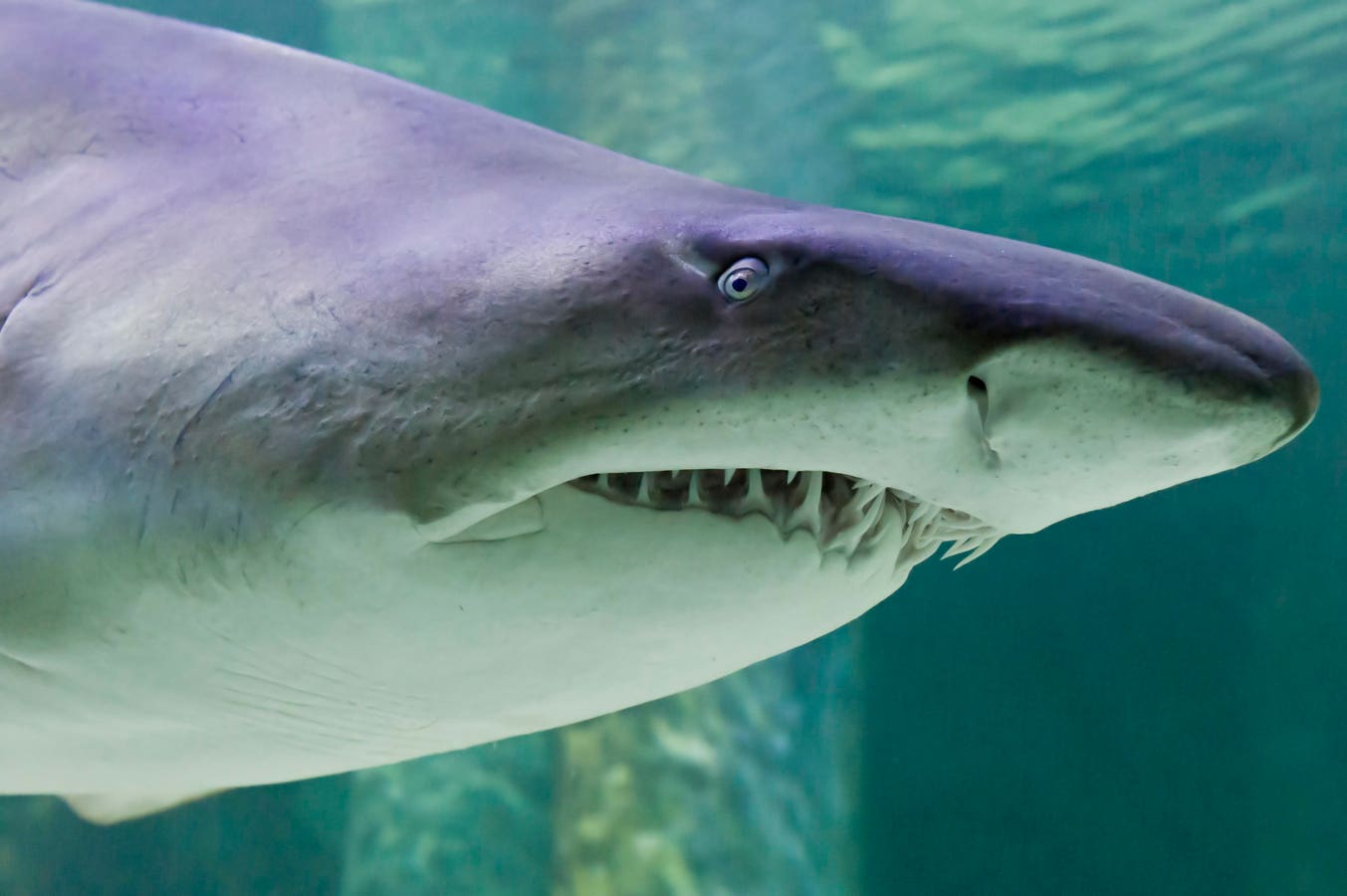
To turn this observation into a practical tool, researchers studied an aquarium-housed female sand tiger shark (Carcharias taurus) that sustained a mating wound while getting busy. Sand tiger sharks are a large, slow-moving shark species found in temperate and subtropical waters around the world, including the eastern United States, South Africa, and Australia. They can reach lengths of up to 10.5 ft (3.2 meters) and are recognizable by their bulky bodies, long pointed snouts, and rows of protruding, needle-like teeth. Despite sporting a rather fearsome appearance, they’re generally docile toward humans and pose little threat. Reproductively, sand tiger sharks are unique among large sharks because females produce only a few pups, sometimes just one per uterus, and embryos practice “intrauterine cannibalism,” consuming their siblings before birth. Their slow reproductive rate makes them especially vulnerable to overfishing and habitat loss, contributing to their status as a globally vulnerable species. This makes each mating event crucial for maintaining populations; by tracking bite wounds and using them as indicators, scientists can identify essential habitats that need protection and even inform management strategies, such as seasonal fishing restrictions or targeted conservation efforts.
Full-thickness wounds are those that penetrate through the epidermis, dermis, and hypodermis, exposing the muscle underneath. By observing the healing process, the team established four stages of wound development: (1) full-thickness, (2) healing, (3) closure, and (4) scar revision. The timeline for the female sand tiger sharks was surprisingly clear-cut. Two weeks after the injury, the wound had entered stage two, showing initial healing. Stage three, characterized by wound closure (as the name suggests), appeared between three and six weeks. Scar revision followed and persisted for the rest of the study (35 weeks).
This staged system allows for scientists to follow a consistent framework to interpret bite wounds in wild sand tiger populations. And with this in hand, researchers turned to images collected by recreational divers for the Spot A Shark USA database. Shipwrecks off the North Carolina coast serve as aggregation sites for sand tiger sharks, and the digital photographs captured by those in the water often show bite wounds on both sexes. After analyzing the photos, clear patterns began to revealed themselves: the wounds effectively create a living record of reproductive activity, helping the team piece together life history events without invasive methods or disrupting the animals. For example, in females, the presence of early-stage wounds (specifically stages one and two), indicated a mating period in late spring to early summer. Observing later-stage wounds (stages three and four) provided evidence that these same sites also function as gestation habitats.
The implications of this research extend beyond sand tiger sharks. It not only highlights this minimally invasive methodology as a valuable addition to the shark conservation toolkit but also demonstrates how leveraging citizen-science divers and high-quality photographic records can monitor behaviors that would otherwise require labor-intensive tagging or direct observation. This approach opens opportunities for ongoing, large-scale monitoring while minimizing stress on the animals themselves. But, since many species of sharks and rays leave similar mating marks, a framework for interpreting bite wounds can be adapted to other species, allowing conservationists to monitor reproductive activity across oceans.
Despite their popularity among divers, basic life history questions, like exact mating locations and seasonal patterns, have been difficult to answer for these predators. Bite wounds now serve as biological signposts, providing a noninvasive window into the hidden world of shark reproduction. Researchers can now begin to answer some questions about sand tiger sharks while leaving the sharks themselves undisturbed. And that is a true win for the species science seeks to protect.
Read the full article here